The car industry likes to pretend it is driven by engineering, innovation and dreams. This is adorable.
In reality, the automotive market is powered almost entirely by insecurity. Men terrified of irrelevance buy pick-up trucks the size of NATO logistics vehicles. Finance managers lease German saloons because they think ‘M Sport’ or ‘quattro’ counts as a personality trait.
Occasionally, though, a manufacturer escapes mere ugliness and enters a sacred dimension beyond taste itself. This is where you find the SsangYong Rodius, the Pontiac Aztek and the Subaru B9 Tribeca. These three were so catastrophically unattractive that they became something more powerful: philosophical statements.
Pontiac Aztek
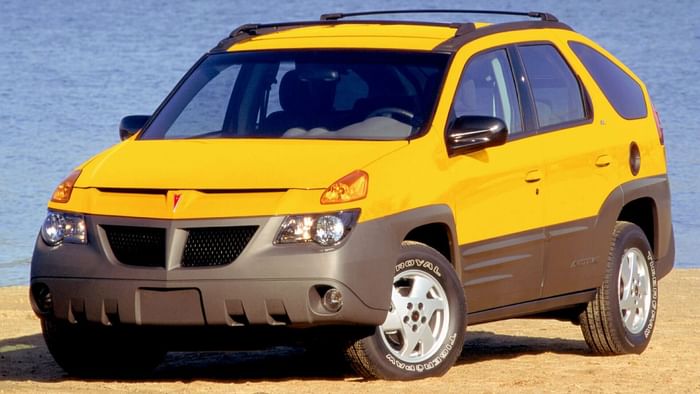
The Pontiac Aztek looked less like a conventional SUV and more like a printer that had developed emotional problems. Every panel seemed to have been designed by a different department. The front end resembled a startled carp, while the rear looked as though someone had tried to fold a minivan using only geometry. It was as if Pontiac had asked itself: ‘What if an SUV could visually communicate divorce?’
And yet, somehow, the Aztek sold in meaningful numbers. Not enough to be a success, obviously; GM had reportedly expected around 75,000 sales a year, while the Aztek managed just over 27,000 units annually from 2001 to 2003 before disappearing after the 2005 model year. But that is still a lot of people voluntarily parking emotional distress on their driveways.
The Aztek’s genius didn’t lie in its asthmatic 3.4-litre V6, which produced 185hp. It lay in understanding, perhaps accidentally, that modern buyers no longer necessarily wanted beautiful cars. They wanted identity. Preferably with plastic cladding.
Breaking Bad later made the Aztek famous, even cool in certain corners of the internet, but we must not allow cultural nostalgia to rewrite history. Walter White drove one because it looked like personal failure rendered in beige.
SsangYong Rodius
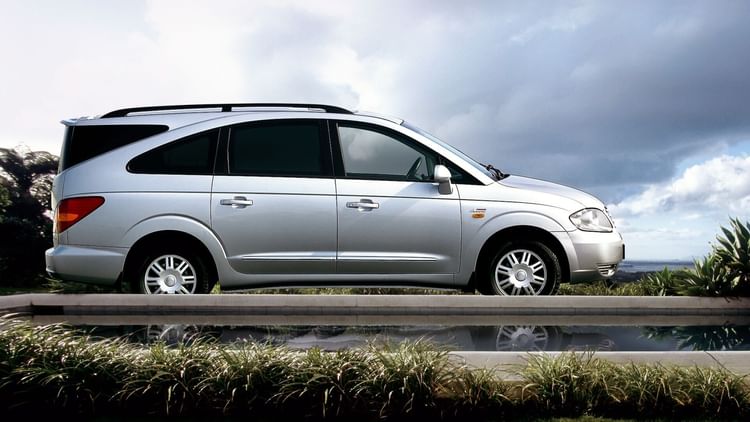
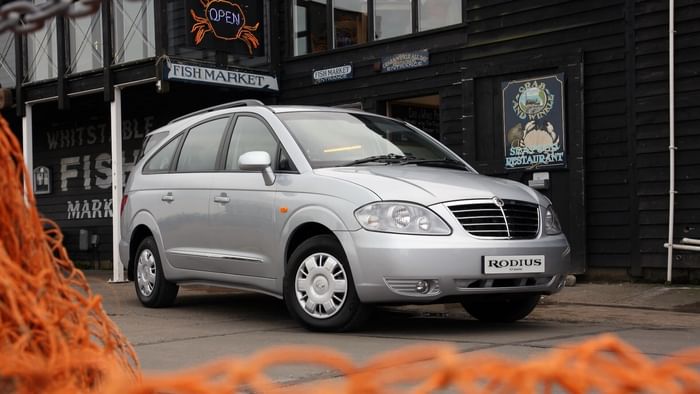
If the Aztek was ugly, the SsangYong Rodius achieved something even weirder: architectural confusion.
Its designers had apparently decided that the best aesthetic reference for a family MPV was a small cargo ship carrying smuggled Samsung microwaves. The miracle is not that the Rodius existed, but that executives saw it, presumably under fluorescent lighting and without hallucinogens, and approved it for production.
Some claimed its styling was inspired by luxury yachts, which is technically believable if the yacht had recently capsized and then been reconstructed from memory by raccoons. And yet the Rodius revealed a harsh economic truth: ugly cars can thrive when they are practical enough.
In some markets, the Rodius was available with up to 11 seats, which instantly moved it beyond normal family transport and into the world of airport shuttles, church minibuses and emergency circus relocation. Its 2.7-litre diesel engine was not there to stir the soul. It was there to move an unreasonable number of people and possibly a washing machine. The Rodius was offered in seven-, nine- and 11-seat configurations depending on market.
Beauty matters until someone needs enough luggage capacity to relocate a Bulgarian circus troupe. People mocked the Rodius relentlessly, but owners defended it with passion. ‘Yes, it looks terrible,’ they would say, already defeated. ‘But you can fit a wardrobe in it.’ This is the language of practical despair.
It is also worth remembering that Rover had flirted with a similar idea with its 2002 TCV concept. Mercifully, history only allowed one of these things to exist in significant numbers.
Subaru B9 Tribeca
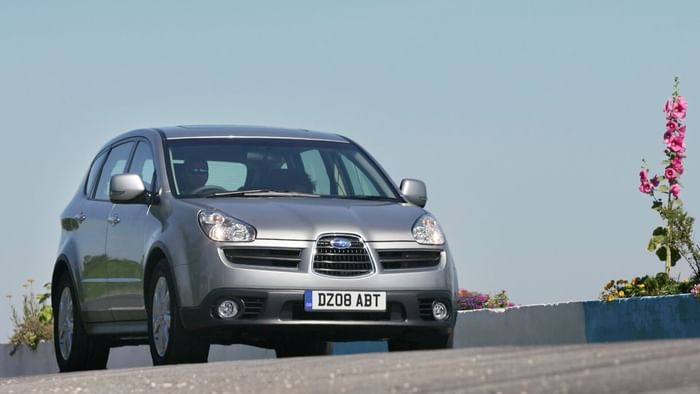
Subaru built its reputation on rugged competence, sensible all-wheel-drive engineering and rally-bred credibility. Then, one day, Subaru executives apparently wandered into a modern art museum, saw a melted trombone and said: ‘Make the grille look like that.’
The Subaru B9 Tribeca’s front end resembled a surprised mollusc attempting tax fraud. It looked less like a car and more like a cartoon rendering of a car after a bee sting.
The tragedy is that underneath the nasal trauma, the Tribeca was not a stupid car. It had all-wheel drive, a flat-six engine and Subaru’s usual air of solid dependability. Early B9 Tribecas used a 3.0-litre H6, while later facelifted models switched to a 3.6-litre H6. But nobody cared, because they were too busy staring at its face.
Eventually, Subaru redesigned the nose for the 2008 model year, dropped the ‘B9’ name and gave the car softer, less alarming styling. This was sensible, but also slightly sad. The damage had been done. The original Tribeca had already entered the pantheon of brave automotive catastrophes.
What’s the point of ugliness?
Despite all this, horrible cars continue to sell because ugliness itself can become a form of marketing.
Beauty is crowded. Every manufacturer wants sleek headlights, sculpted lines, aggressive stances and adverts involving drones flying over Iceland. But ugliness creates identity. Nobody forgets seeing a Rodius. Nobody mistakes an Aztek for anything else. Nobody looks at a B9 Tribeca and says: ‘Ah yes, another anonymous crossover.’
These cars possess the branding power of facial scars in a pirate movie.
Modern car design often suffers from aerodynamic conformity. Every crossover now looks exactly like every other crossover, as though manufacturers have been passing around one giant sheet of tracing paper. Park ten modern SUVs together and you get a greyscale parade of anonymous appliances.
The Aztek, by contrast, can be identified from space. There is power in that.
Ugly cars also benefit from a peculiar psychological effect: after enough exposure, they become lovable. Humans adapt to visual horror with alarming speed. At first, the Aztek looks offensive. Then it looks merely unfortunate. Eventually, somehow, it starts looking ‘kind of interesting’.
This is how Stockholm Syndrome works, only with plastic cladding. The same phenomenon explains Crocs, brutalist architecture and certain politicians.
Cult objects
Over time, these cars evolved from failures into cult objects. Irony plays a major role in this.
Nobody buys a pristine Pontiac Aztek today because they sincerely believe it is beautiful. They buy it because the vehicle has transcended aesthetics and become cultural performance art. Owning one signals that you possess either supreme confidence or catastrophic judgement. Sometimes both.
The internet accelerated this process. Once a car becomes meme-worthy, it gains immortality. The Aztek especially benefited from this transformation, graduating from ridicule to retro affection. Somewhere right now, a 23-year-old graphic designer in pathetic sunglasses is telling friends the Aztek was ‘misunderstood’. No, Kevin. It was hideous.
Manufacturers secretly understand all this. They know outrage creates visibility. A boring car disappears into traffic, but an ugly car becomes a conversation. And in an attention-driven economy, being mocked is often more profitable than being ignored.
This explains why modern automotive design still occasionally produces vehicles resembling depressed kitchen appliances. Cybertruck, anyone?
Deep in some corporate boardroom, an executive is whispering: ‘What if we made the headlights even stranger?’ while shareholders quietly develop hypertension.
The tragedy is that ugly cars often outlive beautiful ones in public memory. Nobody writes nostalgic essays about a mildly attractive mid-size crossover from 2005. But the Aztek, the Rodius and the Tribeca endure because they achieved something rare.
They made people feel something. Mostly confusion. Occasionally nausea. But still: something.
Perhaps that is the final cynical truth of the automotive world. Beauty sells aspiration, but ugliness sells identity. Beautiful cars ask you to admire them. Ugly cars dare you to remember them. And unfortunately, we always do.