Once upon a time – somewhere between a Britpop cassette and a copy of Max Power – the roads were alive with tiny, cheap, wheezy little sports cars.
They were slow and drafty. They had plastic rear windows that went cloudy if you looked at them sternly. And they were glorious.
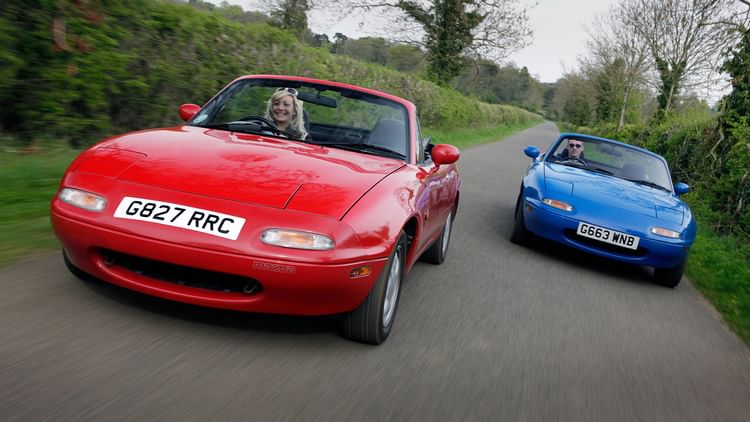
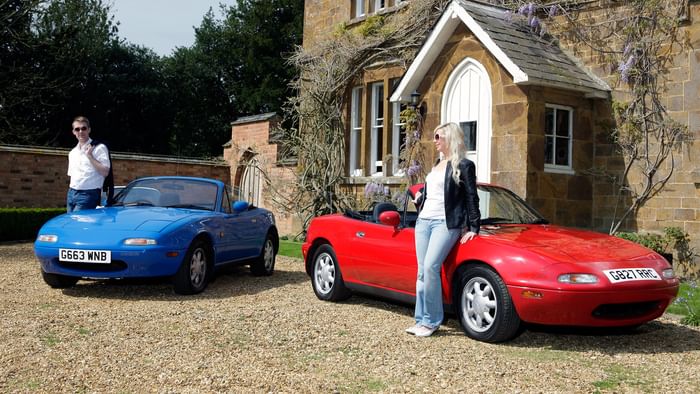
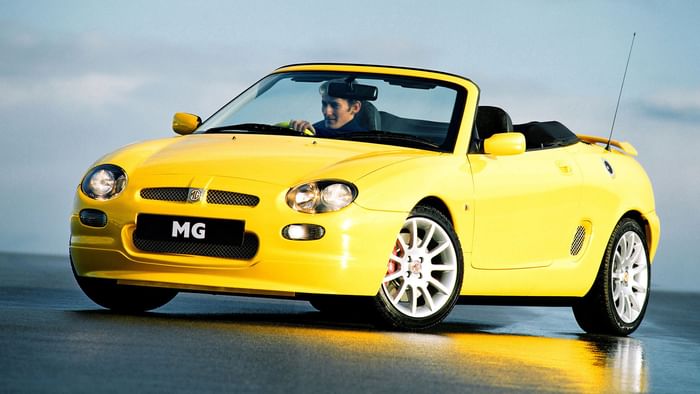
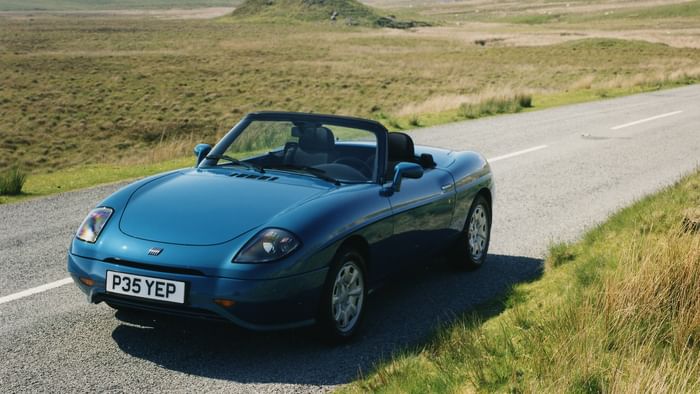
Think of the era of the first-generation Mazda MX-5, the cheerful optimism of the MGF, or the slightly bewildered enthusiasm of the Fiat Barchetta. These cars didn’t promise dominance. Instead, they offered mild sunburn and the thrilling possibility that your hat might leave your head at 43mph.
They were affordable – and that was the key.
Affordable in the sense that you could justify one to yourself with phrases like: ‘It’s basically the same price as a sensible hatchback,’ or ‘I don’t need rear seats, I have optimism.’
Now? They’re vanishing faster than CD players.
Why?
First: money.
Modern cars are less ‘simple joy on wheels’ and more ‘rolling compliance laboratories’. Safety regulations, emissions targets and pedestrian-impact standards are all entirely sensible, but they have quietly conspired to make small, cheap sports cars about as economically viable as selling hand-crafted typewriters.
Airbags alone probably weigh more than an entire 1990s dashboard. Add touchscreens, sensors, stability control, lane assistance and emergency braking, and suddenly your featherweight roadster has developed the mass of the Moon.
Second: power creep.
In the 1990s, 115 horsepower felt daring. Today, if your car doesn’t produce 300 horsepower and the torque of a small tectonic plate, people assume it’s broken.
Social media has convinced us that acceleration times are a measure of moral worth. A 0-60mph time of nine seconds used to mean ‘zippy’. Now it just means: have you tried pushing it?
Small sports cars were never about straight-line speed. They were about momentum. Corners taken with enthusiasm rather than terror. The joy of wringing out every rev. Modern tastes prefer effortless velocity. Why stir a gearbox when a dual-clutch transmission can do it faster while you sip a Starbucks cappuccino?
Third: image.
Wind-in-the-hair motoring has fallen victim to something tragic: self-consciousness.
Once, you could drive a small convertible and look carefree. Somewhere along the way, people decided it looked… try-hard. Convertibles became associated either with midlife crises or rental fleets at Mediterranean airports.
Meanwhile SUVs rose like a herd of very confident hippos. The SUV promises command and height: visibility, perceived safety and cupholders the size of ornamental ponds. A small sports car promises none of these things. It offers low seating, limited luggage space and the possibility of rain entering your soul.
Then there’s practicality. People insist they need space for children, dogs or hypothetical DIY projects that will never occur. The same person who once survived university with a mattress on the floor now requires 600 litres of boot capacity ‘just in case’.
The tiny roadster simply cannot compete with the promise of folding seats and a powered tailgate.
Electricity complicates matters further. Electric cars are many things – quick, quiet and technically fascinating – but they are rarely light. Batteries are heavy. Delightfully, reassuringly heavy.
The charm of a small sports car was its simplicity: a modest engine, a manual gearbox and steering that communicated via mild panic. Recreating that formula with a battery pack the size of a garden patio is… challenging.
Will they return?
History suggests yes – just not in the same way.
Trends are circular. The 1990s roadster revival itself was nostalgia for the 1960s. The original Mazda MX-5 existed because someone in Japan essentially asked: what if we built a modern version of the MGB; something that looked like a Lotus Elan but actually started every morning and didn’t leak oil? That idea worked spectacularly well.
Today’s automotive landscape may look hostile, but there are cracks in the pavement. People are growing tired of excess. Tired of enormous grilles that look like they could inhale wildlife. Tired of software updates for their door handles.
Somewhere, quietly, a new generation is discovering that fun does not require 500 horsepower – just involvement.
The problem, however, is economics. Small, cheap cars don’t make large profits. Manufacturers prefer vehicles that cost more and can be sold with premium trim packages called things like Urban Titanium Black Edition Plus. A minimalist two-seater with wind noise and manual seats is financially less exciting.
Yet enthusiasm is stubborn, and car culture has a habit of rediscovering joy. Already, lightweight driving experiences are becoming boutique luxuries: stripped-back specials and back-to-basics machines. They aren’t cheap – which rather misses the original point – but they prove there’s still appetite.
Will we ever again see a wave of truly inexpensive, underpowered sports cars filling suburban driveways? Possibly not in the same numbers. Regulation and consumer expectations have raised the baseline permanently. However, the spirit is harder to extinguish.
Because at its core, wind-in-the-hair motoring isn’t about speed or status. It’s about vulnerability and exposure; feeling the world rather than isolating yourself from it.
Modern life increasingly wraps us in insulation: acoustic glass, digital interfaces and algorithmic playlists. A tiny sports car strips all that away and reminds you that driving can be an event, not just a commute.
Perhaps that’s why they will never completely disappear. As long as there are people who prefer corners to cupholders, revs to range anxiety and mild sunburn to climate control, the small, cheap, underpowered sports car will lurk somewhere, waiting patiently for fashion to swing back around.
After all, nothing dates quite as quickly as excess. And nothing ages quite as well as simplicity with the roof down.