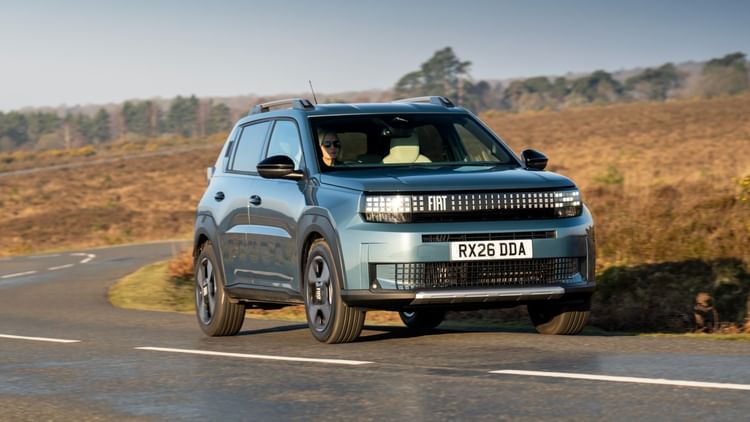
Last month I drove the new Fiat Grande Panda in the UK. I know, right; Petrolblog doing an actual new car review. I’ll make sure I load this opening paragraph with SEO-friendly phrases like ‘Fiat Grande Panda UK review’ and ‘Fiat Grande Panda Hybrid review’.
That should keep the bots happy.
In truth, though, I’m not going to give you a proper, grown-up review of the Grande Panda. I’ll leave that to the serious titles. Instead, allow me to deliver a stream of consciousness based on the things I thought about on the way home from the launch in Herefordshire. Or was it Worcestershire? Potentially both.
It’s worth noting that the Fiat Grande Panda isn’t actually new. Production started in 2025 and it’s already become a familiar sight in European cities.
It’s also not especially Italian. The Grande Panda is built in Serbia and Algeria.
And, depending on your level of Panda obsession, it’s not even a ‘proper’ Panda. The relationship between this and the 1980 Mk1 is much the same as the relationship between the modern MINI and Alec Issigonis’ original design: spiritually connected, visually inspired, but fundamentally a completely different thing.
None of this really matters, because the Grande Panda feels Italian. More importantly, it feels like a Fiat.
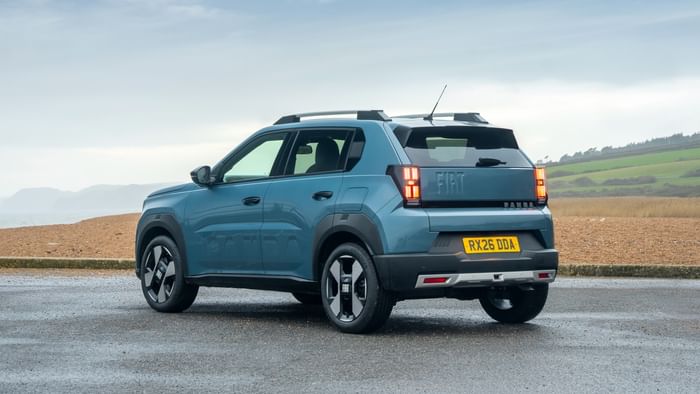
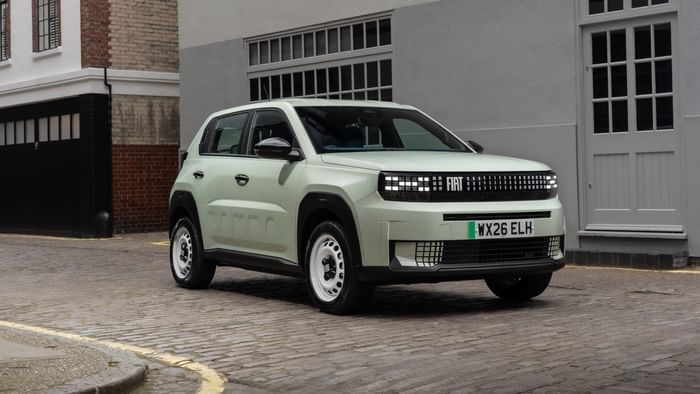
Not just because of the seemingly countless nods to the Giorgetto Giugiaro-designed original, either. Yes, the squared-off wheelarches are there. Yes, the graphics are knowingly retro. Yes, there are giant PANDA stampings in the doors in case you somehow missed the point. But it goes beyond styling details.
There are other cars on the Stellantis Smart Car platform – the Citroën C3 and Vauxhall Frontera, to name a couple – but the Fiat is the one with personality. The one you glance back at when wandering across a petrol station forecourt to pay for fuel. The one you’d actually choose in yellow.
Against all odds, it feels genuinely special.
That’s perhaps the biggest surprise. On paper, the Grande Panda should feel like another cleverly cost-engineered Stellantis crossover assembled from familiar ingredients. Instead, it feels cheerful and slightly eccentric.
Which is very Fiat.
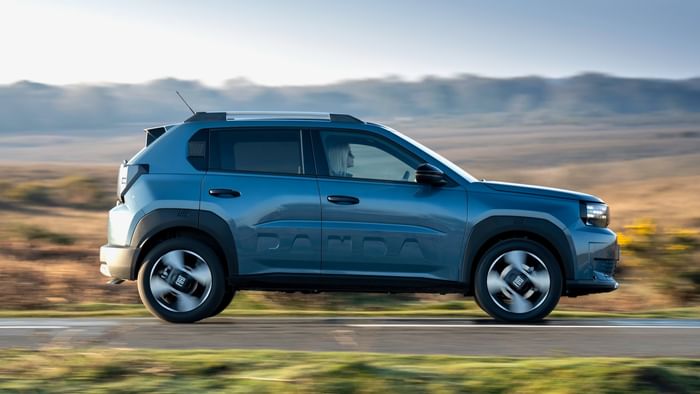
And perhaps that’s why the Grande Panda works. Not because it’s objectively the best small crossover on sale, or because it has the biggest touchscreen, or because somebody in a press release probably described it as ‘urban chic’. It works because it retains the sense of optimism that once defined small Fiats.
You sit in it and immediately want to go all Robert Di Niro and start talking Italian. No spreadsheet can measure that.
And, frankly, it doesn’t really matter how it drives.
Besides, I’d caution against reading too much into a review based on an hour or two behind the wheel, carefully curated and bookended by traditional press office hospitality.
Tell me what the Grande Panda is like on the drive home from an office in Bracknell while the wipers struggle against persistent rain. Can it swallow £250 worth of Tesco shopping on the last Saturday before Christmas? Does it inspire confidence when you pull out to overtake an articulated lorry on an A-road somewhere near Kettering? Will you still enjoy it once the novelty of the PANDA-PANDA-PANDA Easter eggs has worn off?
Those are the things that matter.
And they’re the sort of questions that can’t be answered after a brief drive on the roads around Bromyard.
What I can tell you is that the Fiat Grande Panda has the kind of showroom appeal usually reserved for six-figure supercars.
Bear with me here, but it reminds me of the Ford Mustang when it officially arrived in Europe in 2015. I was fortunate enough to attend the launch in Germany, which included the rural roads of Bavaria and the fashionable lakeside towns around Tegernsee.
At the time, a Mustang with the 2.3-litre EcoBoost engine cost around £29,000, while even the all-American 5.0-litre V8 was barely £33,000. I distinctly remember crawling through one of those immaculate resort towns in a £38,500 Mustang Convertible, Will Smith Summertime-style, and the car turning more heads than anything else this side of Wimbledon Centre Court.
It had theatre. Presence. Glamour. And, crucially, it looked expensive in a way nothing else under £100,000 really did.
I’m not suggesting the Grande Panda can match a Mustang for drama, but it triggers a surprisingly similar reaction. People notice it. They smile at it. They point at it.
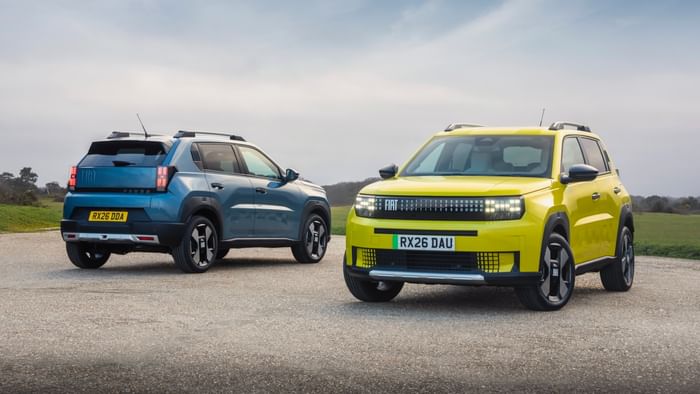
Especially if you order yours in Limone Yellow, Acqua Azure or Lunar Bronze.
Remarkably, the Grande Panda isn’t available in grey or silver. Fiat deserves enormous credit for that alone, and I sincerely hope more manufacturers follow its lead. They won’t, of course, but we can live in hope.
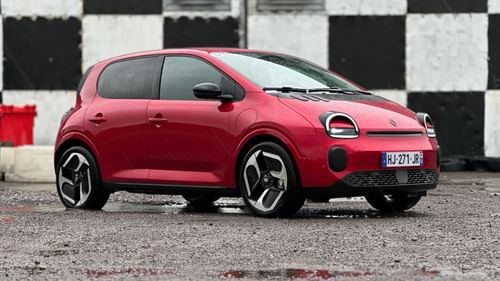
Much of that appeal starts with the exterior styling, which is obviously a homage to the original Panda. A supersized homage to the Mk1, granted – the clue’s in the name – but a successful tribute nonetheless.
Show it to a car enthusiast in 1980 and they’d probably call it a Panda of the future. That’s important.
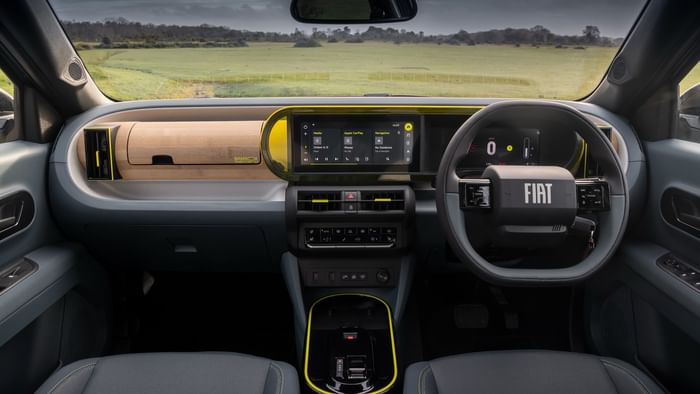
But it’s the details that really matter. There are far too many to list here – and doing so would feel like delivering a series of plot spoilers in a film review – but the highlights include the Fiat badge and grille, which subtly reference the asymmetrical front end of the original Panda, the clever C-pillar badge that reads ‘FIAT’ from one angle and reveals the retro four-bar logo from another, the pixel-effect headlights inspired by retro gaming, the four-bar logos stamped into the tops of the wheelarches, and the wonderfully natty rear lights.
Honestly, the list goes on.
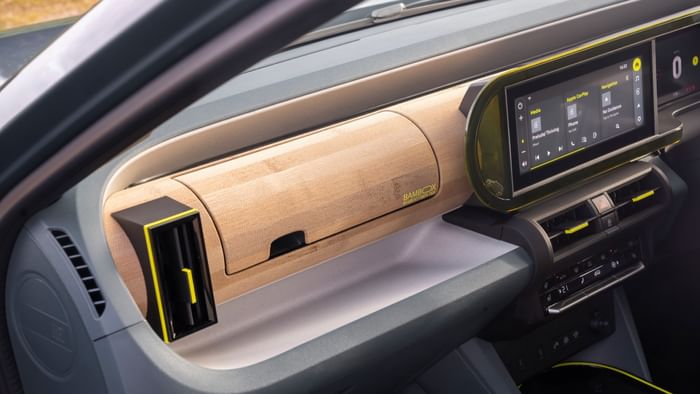
The good vibes continue inside, where the cabin manages to feel just as individual and charming as the exterior. There are enough thoughtful touches to distract you from the harder plastics on the doors and lower dashboard, including the Lingotto-inspired surround for the infotainment and instrument cluster, the miniature Mk1 Panda driving around the 10.25-inch display, the ‘bambox’ glovebox made from 33% bamboo fibres, and the retro four-bar logo sitting off-centre on the steering wheel.
There are almost certainly details I missed. I only noticed the ‘CIAO!’ script on the inside of the tailgate and the elasticated phone pockets on the backs of the front headrests at the last minute.
But that’s the point. The Grande Panda feels refreshingly different. It even has a proper key and an ignition barrel.
In 2026.
Extraordinary.
Not everything will age especially well, mind. The piano black trim between the front seats in the test car was already showing scratches, while the rear-facing section of the centre storage console had picked up a few marks of its own. It’s also worth mentioning that I noticed a couple of rattles in the electric version, where there’s no characterful three-pot to mask them.
Oh, and it might just be me, but I’m convinced the centre armrest is too high. Fine if you’re practising the “Chicken Song” dance with your left arm, less ideal on a long journey.
Still, I’m merely reporting the notes I scribbled down on the day.
And most of my notes are overwhelmingly positive.
That’s rare, because the Fiat Grande Panda feels like an unusually Petrolbloggy new car. In an era of identikit crossovers and touchscreen-heavy appliances, it has genuine character.
It’s thoroughly pleasant to drive. Not fun. Not fast. Not especially engaging. But genuinely good company and a pleasure to spend time in.
The cabin feels light and airy, the boot is excellent for a car of this size, and it dealt with the potholed B-roads of Herefordshire and Worcestershire about as well as anything at this end of the market reasonably can.
You can even squeeze three adults in the back, although the person in the middle will probably spend the journey glaring at you in the rear-view mirror.
As much as it pains me to describe a small-ish car with an £18,995 starting price as ‘good value’, the Grande Panda doesn’t feel cheap. Much like the Citroën C4 Cactus before it, it disguises its humble origins brilliantly with a clever blend of form and function. I really hope it does well.
Electric and hybrid models sit in roughly the same price bracket, so the decision largely comes down to whether you want 199 miles of electric range or an official 55mpg.
Personally, I’d take the hybrid, although there is one thing that could tempt me into the electric version: the entry-level Grande Panda Pop rides on 16-inch white steel wheels.
Nature is healing.
There’s a new Panda on the block.