The BMWs everyone hated 20 years ago are now becoming the cars everyone insists they always secretly loved
This is how the automobile industry works. First we laugh at a car. Then we hate it. Then we tolerate it. Then we suddenly discover that it was ‘ahead of its time’. Finally, we start attending classic car shows in it and telling younger people that they don’t understand proper BMW design. The same people who once described the E65 7 Series as ‘hideous’ are now polishing one on a Sunday morning. Is it progress or senility? Possibly both.
The 7 Series that divided opinion
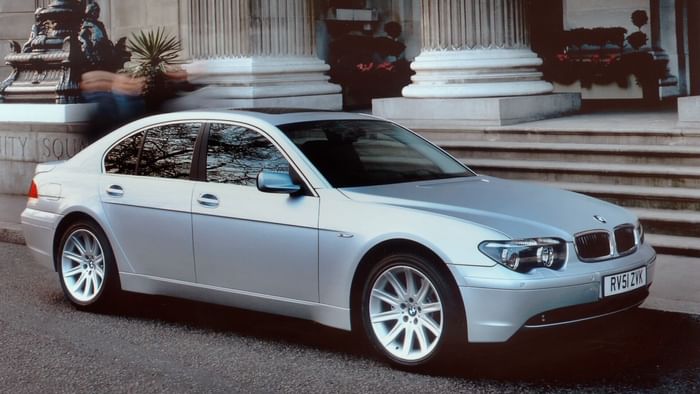
There are certain moments in automotive history when mankind collectively loses its mind. One of them came in 2001, when BMW unveiled a new 7 Series designed by Chris Bangle and apparently decided that the traditional definition of automotive beauty had become rather boring. Until then, BMW had been very good at making cars that looked like BMWs. They were handsome, restrained and slightly aggressive, with the Hofmeister kink instantly recognisable. They generally looked like products of a civilisation that had discovered rulers, geometry and tailoring.
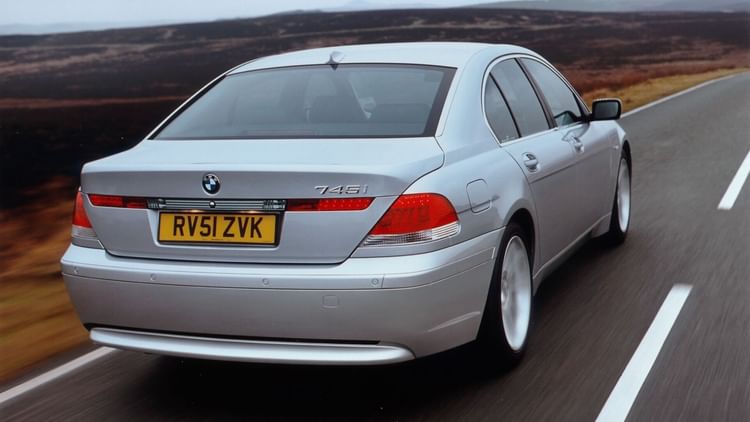
Then came the E65 7 Series. It looked as though someone had designed it while being chased by an angry dog. The bonnet was strangely sculpted. The rear end was enormous. The boot lid appeared to have been placed on the car by a contractor who had arrived late and had no time to measure anything. The headlights looked worried. The grille seemed to be having an existential crisis. The public hated it. So did journalists, BMW enthusiasts and owners of previous BMWs. Even people who had never owned a BMW and had no intention of buying one hated it on principle.
Chris Bangle, meanwhile, apparently stood there thinking: Excellent. He had not really designed an ugly car, just an unfamiliar one. Twenty-five years later, something rather embarrassing has happened: we have started to like them. Worse still, some of us think they are beautiful.
The Bangle era
Chris Bangle became BMW’s chief designer in the 1990s, arriving at a company whose styling department had produced decades of increasingly elegant cars. His brave mission, essentially, was to stop BMW from designing the same car forever. From the point of view of BMW customers, it was rather like hiring a modern architect to redesign Buckingham Palace.
Bangle introduced what became known as Flame Surfacing: complex, intersecting surfaces and sharp lines intended to create the impression that the bodywork was almost flowing around the car. Traditional BMW design had been about clean lines, but Bangle’s BMWs were about lines having arguments with each other. Surfaces didn’t merely meet; they collided. The bonnet, wings, doors and rear quarters all seemed to belong to different cars, accidentally welded together in a particularly ambitious bodyshop.
And yet there was a method to it. The idea was to create cars that changed appearance depending on the light. Instead of a simple crease running from the front wing to the rear, Bangle’s surfaces created reflections that moved across the bodywork. It was sculpture. Unfortunately, sculpture is not always what people want when they have just spent £70,000 on a saloon. The E65 7 Series was followed by the E60 5 Series, the E63 6 Series, the E85 Z4 and, eventually, the E87 1 Series. Each was different and controversial. Almost all were eventually declared ugly.
The E60: suddenly a classic
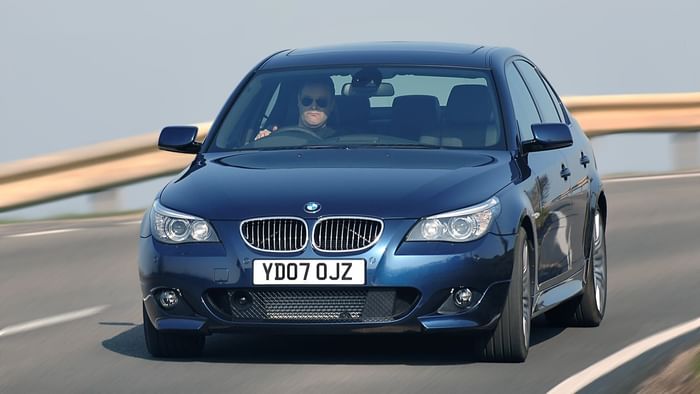
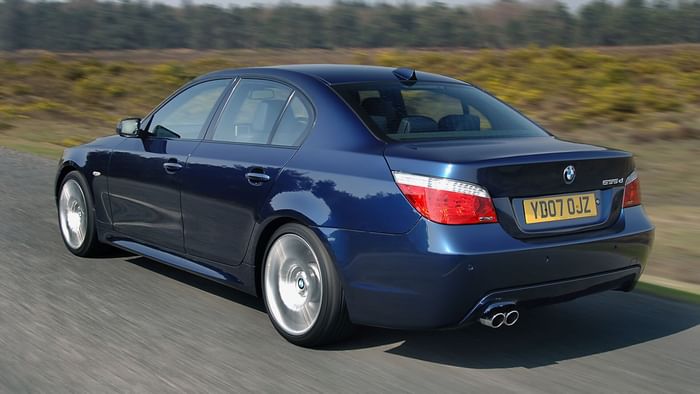
The E60 5 Series might be the greatest example of all. When it arrived, people were horrified. The previous E39 5 Series was almost universally admired. It was the automotive equivalent of a well-tailored dark suit: elegant, serious and discreet. The E60’s headlights seemed to have migrated upwards, its rear end was complicated, and its surfaces looked inflated and deflated simultaneously. People asked what BMW had done. BMW responded by selling loads of them.
The cars weren’t failures; they were successful cars that people enjoyed complaining about. Today, the E60 is increasingly admired. Part of the reason is that it has reached the age when its controversial styling makes sense in a historical context. It is unmistakably early-2000s, with clean proportions and sharp surfaces that aren’t too cartoonish. The glasshouse is relatively delicate, and the car doesn’t have the visual aggression of today’s enormous BMWs.
And then there is the interior. iDrive, anyone? When BMW introduced it, journalists behaved as though the company had replaced the steering wheel with a microwave oven. Owners complained that changing the radio station required an advanced degree in computer science. Eventually, people learned how to use it, to the point that the early iDrive system is now almost charming. You turn the controller, select something and watch the screen. Then you realise that BMW was trying to remove buttons from the dashboard. It seems positively quaint today.
Meanwhile, the E60 M5 has acquired a particularly dangerous reputation for its naturally aspirated 5-litre V10. It sounds as though BMW accidentally installed a Formula 1 car in a family saloon. It was technologically absurd, bloody expensive to maintain and capable of consuming fuel at a rate normally associated with a small aircraft. It also had enough electronic complexity to keep specialists employed until retirement. In other words? It is becoming a classic, naturally.
The Z4: too strange to be pretty
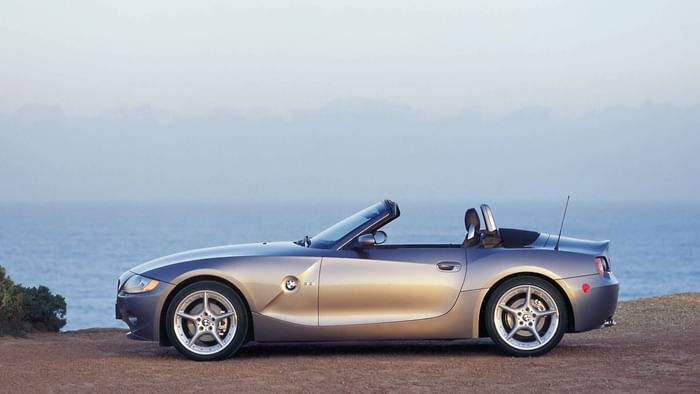
The first-generation Z4 may be the purest expression of Bangle’s philosophy. The old Z3 had been deliberately retro, with traditional BMW circular headlights, a long bonnet and the general appearance of a car designed to star in a film about wealthy Americans falling in love. The Z4 arrived in 2002 and appeared to have been drawn with a knife. The bonnet, sides and rear were creased. The headlights were aggressively shaped. The rear deck seemed to have been cut with an axe.
At the time, people thought it was ridiculous. Today, it looks fantastic for one simple reason: the Z4 has aged, and age is kind to cars. When a new car arrives, we compare it with what came before. When it becomes old, we compare it with what came afterwards. Suddenly, the Z4 doesn’t look strange any more but refreshingly simple.
Compared with modern cars covered in black plastic, fake vents, enormous grilles, LED light signatures and aerodynamic decorations that appear to have been designed by a committee of nightclub owners, the original Z4 is practically minimalist. It has a bonnet, two seats, wheels and a roof that goes away. What more do you want? Apparently, in 2003, we wanted it to look like a Z3. That was the problem. The Z4 wasn’t ugly, just not sufficiently nostalgic. Today, nostalgia has caught up with it.
The 1 Series: the ugly duckling becomes cool
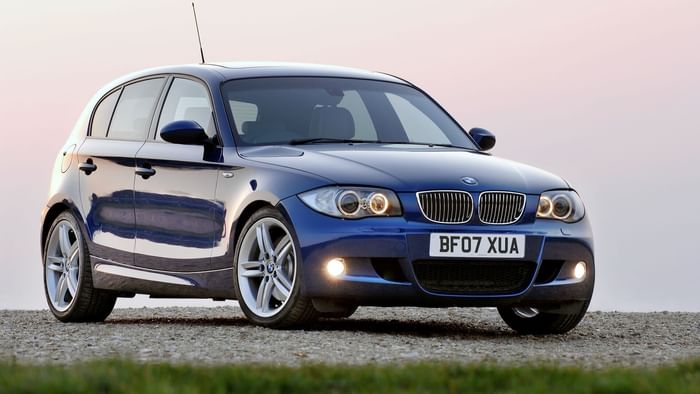
BMW’s idea for the original 1 Series was simple enough: take the brand’s rear-wheel-drive philosophy and make it smaller and cheaper. The result was the E87 1 Series, which wasn’t conventionally pretty. Its proportions were odd because BMW had insisted on fitting a longitudinal engine into a relatively small body. The bonnet was long. The cabin sat strangely far back. The front seemed to be looking at you with mild suspicion.
Punters hated the headlights, rear lights and proportions. They hated the fact that BMW had produced a small car that looked like a large car BMW had left in the washing machine. And yet, now? It is becoming cool. The original 1 Series has something increasingly rare: mechanical honesty. It is rear-wheel drive, has interesting engines and carries relatively little visual clutter.
More importantly, it belongs to a period before every BMW became an enormous electronic ecosystem with a grille large enough to accommodate a complete football team. The E87 is beginning to look like a relic from a simpler civilisation in which you could buy a BMW without needing to spend half an afternoon configuring the ambient lighting.
The great automotive rehabilitation
This is not unique to BMW. The history of the automobile is essentially the history of people changing their minds. The Citroën DS was strange, the Porsche 928 was controversial, the Lamborghini Countach was ridiculous, the Fiat Multipla was grotesque, and the Renault Avantime looked like a mistake.
Yet time has a peculiar ability to transform embarrassing styling decisions into ‘bold design statements’. This is especially true once manufacturers stop making cars like them. That is the secret: the Bangle BMWs have become interesting because BMW no longer makes them. Today’s BMWs are considerably more aggressive, with grilles that have grown to the dimensions of small swimming pools. Cars have become taller, wider and heavier. Decorative vents proliferate. Lighting has become theatrical.
Against this background, the E60 suddenly looks restrained, the E65 suddenly looks elegant, and the Z4 suddenly looks pure. The 1 Series suddenly looks delightfully compact, and even the infamous boot of the 7 Series starts to make sense. This is how nostalgia works: it takes newness away. Once a car is no longer new, you stop asking why it doesn’t look like the previous model and start asking what made it special. That is precisely what happened to the Bangle BMWs.

Chris Bangle’s revenge
There is something wonderfully cynical about the whole affair. BMW spent years defending Bangle’s designs while owners spent years criticising them. Now both Bangle and BMW have moved on. The cars have depreciated, and used-car buyers have discovered them. People who couldn’t have afforded an E60 when new can now buy one for half the price of a well-equipped modern hatchback. Then they discover that the old BMW is actually rather good.
And suddenly: ‘Do you know, I’ve always liked the E60.’ No, you haven’t. It was hideous in 2003. You said the rear lights looked Japanese, the dashboard was awful and BMW had lost the plot. However, that’s all right, because we have collectively decided that you have always liked it. History is generous. The most amusing part is that Chris Bangle himself probably understood this better than anyone.
Flame Surfacing was never meant to be universally loved on day one. It was meant to move BMW in a new direction, and it did. It forced people to reconsider what a BMW could look like. The irony is that, two decades later, those supposedly outrageous cars now look remarkably coherent. The E65 7 Series, E60 5 Series, E85 Z4 and E87 1 Series don’t look like modern cars, but like products of a particular moment in time.
That is exactly what gives a car classic status. A classic isn’t necessarily the prettiest car; it is the car that has become interesting enough for us to forgive its faults. The Bangle BMWs have plenty of faults, but they also have character. In today’s automotive world, that may be the most valuable feature of all.
So, if you happen to own an E60, an E65, an early Z4 or an original 1 Series, don’t sell it just yet: polish it, look after it and keep the paperwork. If someone tells you it was ugly when new, simply smile. They are absolutely right. Then again, so were the clothes, hairstyles, houses and music of the early 2000s. Somehow, all of those are fashionable again, too.
Give it another ten years, and someone will probably tell us the BMW 7 Series E65 was one of the great masterpieces of modern automotive design. At that point, don’t argue; just nod solemnly. Then ask if they’d like to buy yours for £70,000. After all, it’s a classic now.
All images © BMW.