From petrol to electric: How BMW ownership is changing
For generations of BMW owners, the routine was straightforward. Keep an eye on the fuel gauge, stop at a petrol station when necessary and get back on the road. Electric BMWs have changed that routine, but perhaps not as dramatically as some might expect.
The biggest difference is not necessarily behind the wheel. It is what happens when the car is parked.
Charging can become part of everyday life, whether that means plugging in overnight at home or connecting to a public charger while having lunch. For BMW drivers making the move from petrol to electric, understanding this new routine is arguably more useful than memorising a list of EV statistics.
One small but important part of that routine is the BMW Type 2 charging cable.
Choosing a BMW Type 2 charging cable
A charging cable might not be the most exciting piece of equipment associated with owning a BMW, but it can make a noticeable difference when using public charging points.
Type 2 is the standard connection for AC charging across Europe. Many public AC chargers are untethered, meaning there is no cable permanently attached to the charging station. In that situation, the driver needs to carry their own cable to connect the car.
That makes a BMW Type 2 cable a useful part of the equipment kept in the boot.
There are also several factors worth considering when choosing one. Cable length, charging capacity and compatibility with the car all matter, particularly if the cable will be used regularly rather than simply carried as a backup.
Charging speed is not just about the cable
This is where electric car ownership introduces a few numbers that can initially seem confusing.
Type 2 cables are available in different ratings, including 3.7kW, 7.4kW, 11kW and 22kW. However, the rating of the cable does not determine the charging speed by itself.
The car's onboard charger also has a maximum charging capacity. If the car can only accept 3.7kW, connecting it to a 22kW charging point will not make it charge at 22kW.
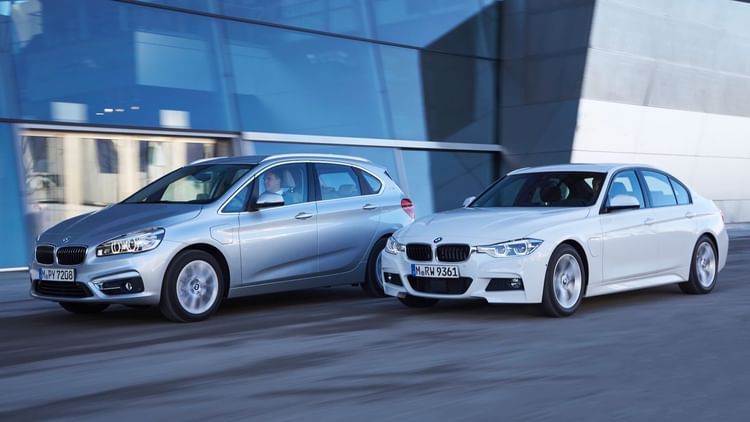
The BMW 225xe is a useful example. Its onboard charging capability is limited to 3.7kW, so using an 11kW or 22kW cable will not increase the charging speed of the car. The vehicle itself remains the limiting factor.
That does not necessarily make a higher-rated cable a bad choice. Someone driving a 225xe today may eventually move to a fully electric BMW and want a cable that remains suitable for a future vehicle.
This is why choosing a Type 2 charging cable for BMW should be about the car and charging setup rather than simply choosing the biggest number available.
The cable you carry matters
Petrol cars have one obvious advantage when it comes to refuelling. Nearly every filling station provides everything needed to fill the tank.
Electric cars work slightly differently. If you arrive at an AC charging point without an attached cable, you need your own cable before you can start charging.
Length can make a difference too. A short cable may be perfectly convenient when the charging point is close to the charging socket. In a busy car park, however, the position of the charger is not always ideal.
A longer cable can provide more flexibility, while a shorter one can be easier to handle and store. There is no single answer that works for every BMW owner.
Voldt offers Type 2 charging cables in different lengths and power ratings, including 11kW and 22kW options. This allows drivers to choose equipment based on their vehicle and the charging points they are likely to use.
It is a relatively minor detail, but these are often the things that become important once electric car ownership moves from theory to everyday use.
From refuelling to charging
There is also a difference in the way energy becomes part of the driving routine.
Refuelling a petrol car is normally an interruption. You stop, fill the tank and continue your journey. Charging can happen while the car is already parked. At home, for example, a BMW can be connected overnight and ready for the following morning.
That changes the way range is viewed.
Instead of waiting until the battery is nearly empty, drivers can simply charge when the car is parked for long enough. For longer journeys, however, some planning is still useful. Checking charging locations along the route and knowing whether you need your own cable can prevent unnecessary surprises.
The driving experience itself does not have to become less enjoyable. The preparation simply moves to a different part of the ownership experience.
What has not changed?
Despite the move towards electrification, plenty about BMW ownership remains familiar.
The driving position still matters. Steering response still matters. And a good road is still a good road, regardless of whether the energy reaching the wheels originally came from a petrol pump or a charging station.
That is perhaps the most interesting part of the transition. The technology is changing, but the reason people enjoy driving a BMW has not disappeared.
For drivers making the switch, getting the practical details right can make the transition considerably easier. Choosing the right BMW Type 2 charging cable for the vehicle and charging setup is one of those small decisions that can make everyday ownership simpler.
Voldt provides Type 2 charging cables in different lengths and power ratings, giving BMW drivers options for different vehicles and charging requirements.
The technology may be changing, but the principle remains familiar: make sure the car is ready, then enjoy the drive.
Image © BMW