It’s often said that we can’t have nice things. Heck, Taylor Swift – no relation to the Suzuki supermini – even wrote a song about it. That said, I’m pretty sure Ms Swift didn’t mention the Kia K4.
In Britain, the K4 is best known as a telephone box designed by the General Post Office in the 1930s. It was a clever thing, combining a phone box, post box and stamp machine in one pleasingly red package. Naturally, because it was useful, interesting and faintly odd, very few were made.
The K4 is also the name of a new Kia, introduced globally before arriving here as a replacement for the Ceed. Depending on where you live, the K4 family includes a four-door saloon, a five-door hatchback and a five-door estate, known as the Sportswagon. Because Britain has decided saloons are only acceptable if they wear a German badge and are driven too close to the car in front on the M40, we get the hatchback. The Sportswagon follows later.
I’ll confess, my knowledge of the new car market isn’t what it used to be. I spend the majority of my time writing about old metal, so I’m not the guy to chat with if you want a detailed and accurate description of what’s currently on sale. Keeping up with the influx of Chinese cars is a job for other people, ideally people with spreadsheets, fleet contacts and the ability to identify a Jaecoo from an Omoda at twenty paces.
I know enough, however, to recommend Kia or Hyundai to non-car people. Both brands have a reputation for reliability, decent value, smart interiors and, particularly in Kia’s case, smart designs. They build cars you can recommend without fear of an angry WhatsApp message when your mate has been left stranded on the M6 with three children, a cockapoo and an illuminated warning light shaped like a tiny aubergine.
But what has this got to do with Petrolblog, I hear you ask.
Well, last week I was invited to a Kia range day as part of my membership of the Western Group of Motoring Writers. It’s the sort of event where I have to pretend that I’m a proper motoring writer and deserve to be in such esteemed company, rather than a man who spends too much time thinking about Renault Safranes and the correct colour for a Mk1 Fiat Punto.
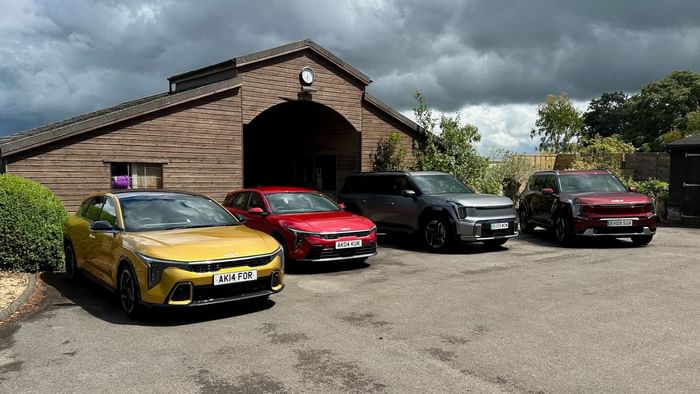
Anyway, I drove several new Kias, starting with the giant EV9 GT, in which I pretended to be Ginny Buckley ferrying people to their dream houses in Escape to the Country. It’s a formidable car, but I guess it should be for £83,000. For that kind of money, I expect a panoramic sunroof, many electric motors and a handwritten apology from my bank manager.
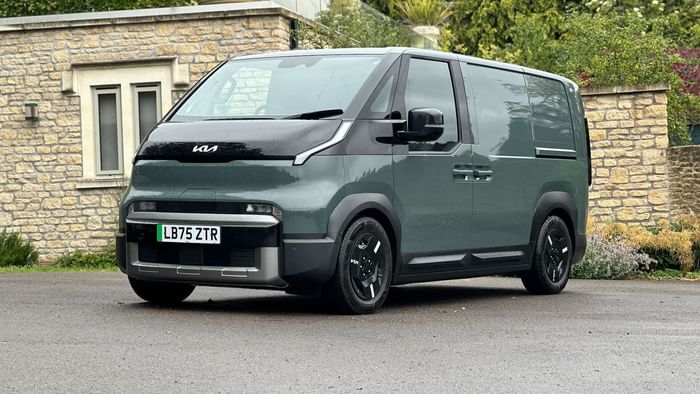
Next up was the Kia PV5. I drove it to Starbucks for a flat white and returned smiling, wondering whether a new career as an Evri driver might suit me. I could see myself in a PV5, gliding silently through a housing estate, carefully placing a parcel in a recycling bin before sending photographic proof to a confused man called Derek.
I also drove the Kia Stonic, but only because my mother-in-law is thinking of buying one. It’s OK, but it’s more garden-centre car park than mystery house in the Cotswolds.
Which brings me to the K4.
I wasn’t expecting much. Actually, I wasn’t expecting anything. There were two K4 hatchbacks in the car park, surrounded by more fashionable things with batteries. I mean, who launches a new hatchback into a market obsessed with crossovers? It’s like the Nissan Pulsar all over again.
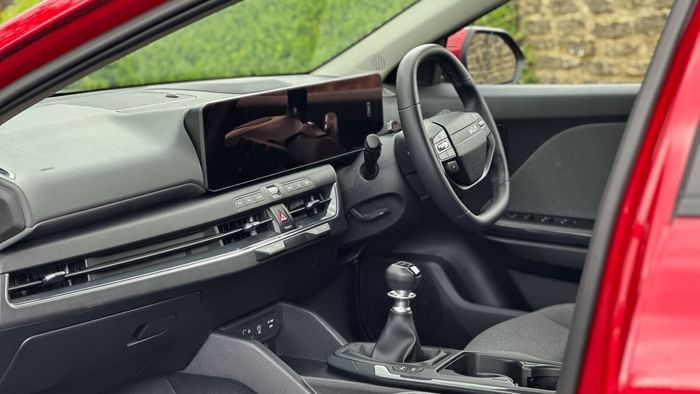
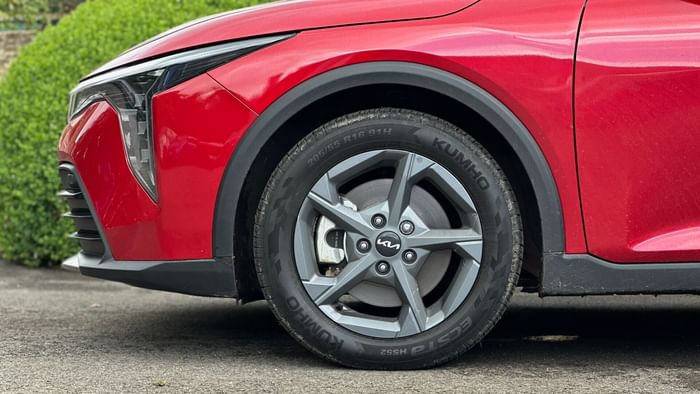
I jumped in a Kia K4 in entry-level Pure trim with a 1.0-litre turbocharged mild-hybrid petrol engine and, get this, a manual gearbox. It even has relatively small 16-inch alloy wheels and proper sidewalls on the tyres. What is this witchcraft?
Granted, at £26,795, it isn’t cheap, but in true Kia fashion it’s loaded with toys and comes with a seven-year warranty. Not that anyone ever mentions the warranty when writing about Kias.
It’s brilliant. Not in a life-changing, sell-your-children-and-buy-a-Kia sort of way, but in the way a normal hatchback can be brilliant when it’s properly thought through. I spent an hour driving on the roads south of Bath, dodging potholes, holding up people in new Land Rover Defenders – why are the drivers in such a hurry all of the time? – and revelling in the uncannily good driving position.
I also spent a considerable amount of time staring at the steering wheel and dashboard layout and drawing comparisons with the Rover SD1. Just me? Probably. OK, moving swiftly on.
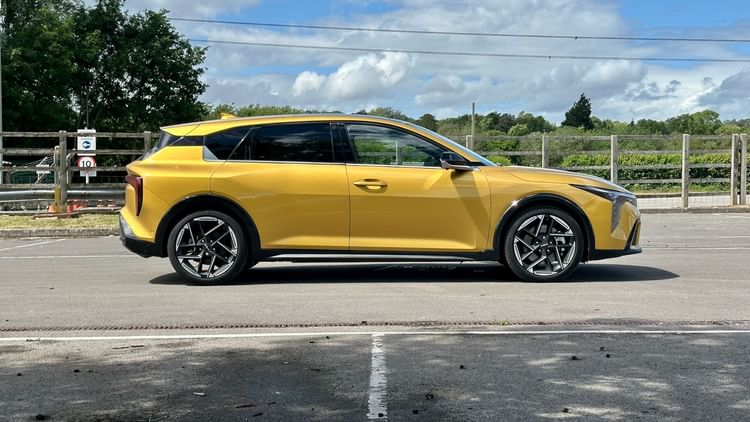
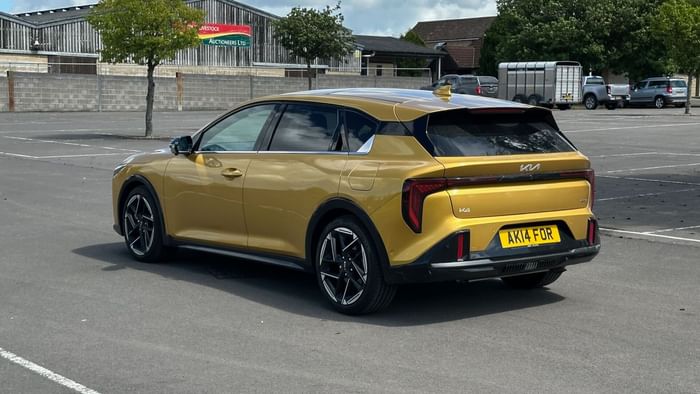
Later that day, I drove the flagship edition of the Kia K4 in GT-Line S trim with a 1.6-litre turbocharged petrol engine and an automatic transmission. It costs around £10,000 more than the 1.0-litre Pure with a manual gearbox and is available with optional Sparkling Yellow paint. You won’t lose your car in Dobbies car park.
Predictably, it’s significantly faster. Its 177bhp engine is enough to propel the K4 from zero to garden centre in 8.4 seconds and on to a top speed of 130mph. Decent figures, and enough to make me hope the forthcoming Sportswagon will be some kind of GT-cum-shooting brake affair. Insert praying emoji.
But given the choice between the K4 in its, ahem, purest form or the bells-and-whistles go-faster edition, I’d choose the entry-level version. I loved its honesty, simplicity and lightness. It’s not what you’d call a driver’s car, but after driving EVs in which the weight of the batteries is never far from your mind, a car with only mild-hybrid assistance feels like a featherweight.
You can read more detailed and worthy Kia K4 reviews on the proper motoring websites, but after a couple of hours behind the wheel of two versions, I was itching to spend more time with one of them.
Which is why, when emailing the Kia press office about an unrelated matter, I floated the idea of borrowing a K4 for a feature. The big publications did their thing in the spring, so there might be scope for a Petrolblog review.
Nope, that’s not happening. And I quote:
“Kia can confirm that the Kia K4 ICE and mild hybrid are now off sale in the UK, as part of the model’s natural lifecycle. The K4 will now transition to a hybrid electric vehicle (HEV) powertrain later in 2026, marking a significant step in the hatchback’s evolution and supporting Kia’s broader move towards electrification.
“The model will be offered exclusively as a hybrid, to simplify the line-up. The introduction of K4 HEV will also represent Kia’s first hybrid offering in the C-segment hatchback market, delivering a more efficient choice for customers, and emphasising Kia’s commitment in an important segment which some brands have reduced their presence in.
“Alongside the K4 HEV, Kia will also introduce K4 Sportswagon HEV, an estate variant which will offer customers maximised versatility and cavernous cargo space. Full details on specifications, timing and ordering will be confirmed in due course. Existing customer orders will continue to be fulfilled, although lead times may be extended as production transitions from ICE to HEV.”
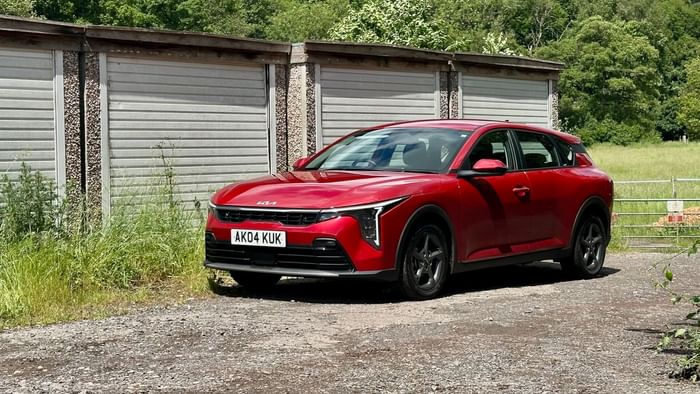
There goes another dream. I mean, the K4 isn’t dead – and the Sportswagon is still coming – but my hopes of driving a notionally poverty-spec K4 with a 1.0-litre engine are over. Another slow-selling victim of the UK’s obsession with crossovers? Maybe. Kia says otherwise, of course.
So, forgive me for mourning the unexpected loss of a good-looking hatchback. The K4 petrol arrived, blinked, and effectively vanished. Most people won’t have seen one. Many won’t know it existed. It risks becoming one of those cars you spot in fifteen years and say: ‘Oh yes, I forgot they sold those.’
There’s a special place in my heart for cars that arrive at the wrong time, in the wrong market, or with the wrong badge. The K4 might be one of those cars: a conventional hatchback launched into a country intoxicated by crossovers. A petrol version withdrawn before the public had fully learned its name. A future estate arriving into a market that claims to love practicality but often seems more interested in looking outdoorsy while queuing for a car wash.
It’s not a tragedy. Nobody has taken away the last Citroën BX estate or crushed a warehouse full of unsold Avantimes. Kia is simply simplifying the K4 line-up and moving the car towards hybrid power. Sensible, logical and probably correct.
But that’s the problem with sensible, logical and probably correct. They’re rarely as interesting as wrong.
The petrol K4 felt like a nice thing. Not the car to make the nation fall back in love with C-segment hatchbacks, but a well-judged car in a world increasingly short of well-judged cars. And now, almost before anyone noticed, it’s gone.
Soon we’ll have the K4 HEV and K4 Sportswagon HEV, and I’m genuinely looking forward to trying them. The hybrid could be the version the car always needed. The Sportswagon might even be the one to recommend to people who need space, efficiency and a badge that won’t frighten the neighbours. But part of me will always admire the short-lived petrol K4 for existing at all.
Like the original GPO K4 telephone box, it may turn out to be rare, useful and slightly misunderstood. The sort of thing Britain barely noticed when it was new, then gets misty-eyed about once it has disappeared.
Proof, perhaps, that we really can’t have nice things. Or maybe proof that, when we do, we don’t buy them.