St Athan, Wales – In a development experts are already calling “bold”, “confusing”, and “possibly the result of a very long lunch”, the long-defunct Welsh sports car manufacturer Gilbern and the famously tiny Isle of Man-built Peel Trident are to make a triumphant return.
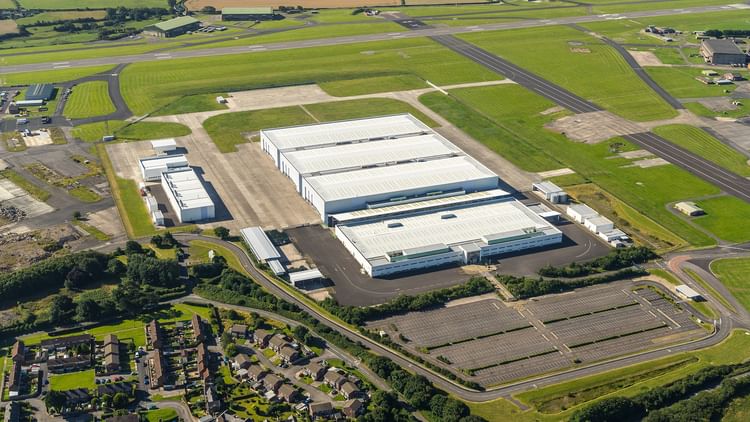
The reborn marques will produce a new range of £500,000 electric vehicles at an “under-used but emotionally available” Aston Martin factory in St Athan, Wales.
The announcement was made by Gerry McGovern himself, until recently JLR’s Head of Design and the man widely credited with masterminding its woke-and-broke design era. The press conference was held in a draughty, empty hangar featuring a lectern balanced on a crate marked ‘DBX door handles – do not open’. Behind it stood a bodged, hastily hand-made banner reading:
“Small Cars. Big Prices. Bigger Dreams.”
A modest comeback aimed at woke tech crypto-billionaires
Gilbern had its heyday in the early 1970s, producing proudly griffin-adorned, charmingly optimistic sports cars that leaked oil and ambition in equal measure. The company was founded by Giles Smith, a Church Village butcher, and Bernard Friese, an ex-POW who happened to be a master of glassfibre lay-up.
Production later moved to larger premises in Llantwit Fardre, after the smell of glassfibre hardener began doing Giles’ meat business no favours.
Gilbern will return under the name Gilbern Dragon-E, a hand-assembled, plastic-bodied electric grand tourer weighing approximately the same as Cadair Idris, give or take a sheep.
Meanwhile, the Peel Trident – once marketed as ‘the smallest production car in the world’ – will re-emerge as the Peel Trident Quantum, a single-seat electric ‘urban mobility pod’ with a useful range of 20 miles on a good day, and fewer if you enjoy yourself.
Both cars will retail at £500,000 before options, or £780,000 with cupholders.
When asked why such historically humble brands had chosen such a lofty price point, Major Upset, the newly appointed Chief Visionary Synergy Officer (CVSO), explained:
“Because £500k says ‘heritage’ in a much bolder way than £30k ever could.”
Why Wales? Why now? Why this?
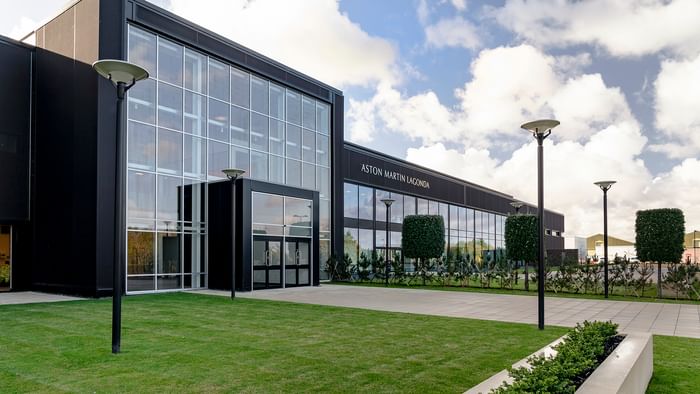
The cars will be built at Aston Martin’s St Athan facility, described in the press release as “under-used but spiritually aligned with ambition.” Sources close to the factory say it currently contains three partially assembled SUVs, several inspirational posters and a lingering sense of regret.
An Aston Martin spokesperson confirmed the partnership: “We weren’t using all of the building all of the time, and someone left a PowerPoint running overnight. When we woke up, Gilbern and Peel were back.”
The Welsh Government has welcomed the project, praising it as “an exciting opportunity to create jobs in areas such as artisanal carbon-fibre polishing, heritage storytelling and invoice explaining.” Former Port Talbot steelworkers are reportedly queuing already.
The cars: eyebrow-raising specifications
The Gilbern Dragon-E will feature:
- 0-60 mph described as “eventually”
- A 700-mile range, achievable “when driven downhill, emotionally”
- A dashboard trimmed in reclaimed slate, locally sourced sheep wool and nostalgia
- A Driver Engagement Mode which randomly disables power steering for authenticity
The Peel Trident Quantum, meanwhile, is just 1.8 metres long and 1.79 metres wide, due entirely to its price tag.
Key features include:
- One seat, “because loneliness is lighter”
- No reverse gear, encouraging “forward-thinking mobility”
- A touchscreen that displays only the words “You Could Have Bought a House”
- An optional second door, priced at £90,000
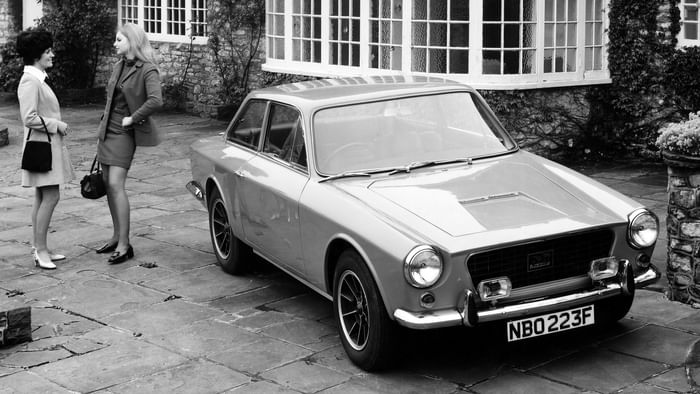
Pictured below: a 1960s Gilbern Genie – powered by Essex, not electricity.
Heritage, reimagined (and overpriced)
Executives insist the revival is all about honouring history – albeit selectively. Mr Llywelyn, a well-known Gilbern historian, explained: “The original Gilberns were affordable, Welsh-built sports cars for ordinary people. We’ve kept the Welsh bit.”
Peel representatives from the Isle of Man were similarly upbeat: “The original Trident was cheap, cheerful and accessible. We’ve retained the cheerfulness.”
Both brands will offer extensive heritage packages, including:
- Deliberately misaligned vintage-style badges
- Artificial Castrol or Duckhams-style oil stains for the garage floor
- A downloadable PDF explaining why the price makes sense, if you really think about it
The target market: everyone – and no one
Market research suggests the cars are aimed at:
- Crypto investors who miss buttons
- Tech founders with medieval castles but nowhere to park
- Ferrari collectors who already own everything and are bored
- People who say ‘it’s not about the money’ unironically
One early customer, who asked to be identified only as ‘Sebastian, but not that one’, said: “I love the idea of driving a Peel Trident past people waiting for a bus. It says something about me, even though I’m not sure what.”
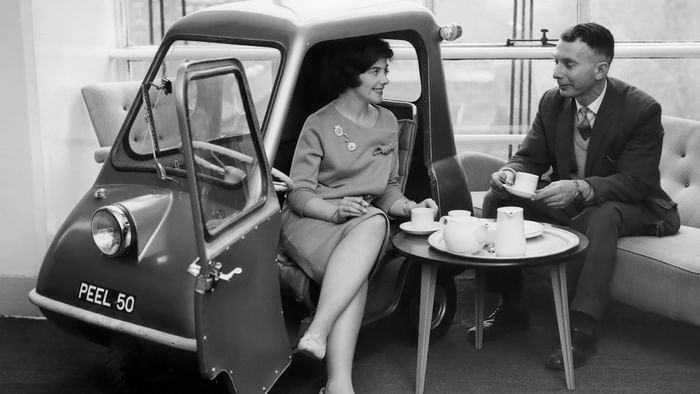
Pictured below: a Peel P50 prototype – powered by optimism, not crypto.
Carefully chosen production volumes
Annual production will be limited to 12 vehicles per brand, or fewer if anyone asks difficult questions.
Each car will take up to 18 months to build, largely due to a rigorous process involving:
- Sub-committees hand-selecting materials
- Larger committees discussing those materials
- Even larger committees re-selecting different materials
- Much bigger committees explaining the delay as ‘craftsmanship’
The future is electric, expensive… and slightly Welsh
Industry analysts are divided. Some call the project “a brave reinterpretation of British motoring heritage.” Others describe it as “a £500,000 punchline with wheels.”
Optimism, however, remains high among the project’s leadership. As the CVSO concluded: “Electric vehicles are the future. Heritage is the past. We’ve combined both, added a zero to the price, and built them in Wales. What could possibly go wrong?”
First deliveries are expected in late 2027, or possibly earlier if time itself becomes more flexible.
Until then, motoring enthusiasts can only marvel at a bold new chapter in British automotive history: one where tiny bubble cars and forgotten Welsh sports coupés rise again, powered by electricity, nostalgia and a truly heroic sense of confidence.
Disclaimer: This is a satirical feature. No authentic, highly original, patinated Gilberns or Peels were harmed in the making of it. St Athan photos courtesy of Aston Martin.