I’m not sure where to start. My stomach is filled with a kaleidoscope of butterflies while my hands are trembling like I’m about to present my homework to class 4B. The Nissan Pike Factory cars have always had that effect on me, so I apologise in advance if this story brings out the fanboy in me. These are my ‘fab four’ and I don’t mind admitting that I’m prone to wild outbursts of excitement in their company.
The story begins during the Japanese asset price bubble, known as the ‘bubble economy’, a period of extravagant consumption and a sense of invincibility. Between 1986 and 1991, Japan’s economy expanded by the equivalent of France’s gross domestic product as the world was flooded with ‘Made in Japan’ goods. ‘Anything we could do, Japan could do better,’ the New York Times reported in 2008. ‘We made Pintos; they made Accords.’ The automotive industry was at the heart of the economic boom. Production of cars, buses and trucks hit 13,486,796 in 1990, up 3.5 percent from the previous year. It was the third straight year of growth, fuelled by the domestic demand for vehicles, which was up by 7.1 percent to 7.77 million. Seemingly endless research and development budgets combined with an insatiable appetite for new products and technology, not to mention easy access to credit, sent the economy into hyperdrive. At one point, the ground beneath the Imperial Palace in Tokyo was thought to be worth more than the state of California. It couldn’t last; the Nikkei index hit an all-time high on 29 December 1989 before the bubble burst and the stock market collapsed. Martin Schulz, a senior economist at the Fujitsu Research Institute, said in a Guardian report in 2019: ‘Japan’s 1980s bubble was the bursting start of a long adaption from a young fast-growing economy to an ageing, slow-growth new normal.’
Japan’s bubble economy is a tale of accelerated growth, rapid decline and long-term rebuilding. It’s also a story of wild innovation, bold decision making and crazy risk taking within the Japanese automotive industry. ‘Wild’, ‘bold’ and ‘crazy’ are three words you’d associate with the 1989 Tokyo motor show. Held for the first time at the Makuhari Messe (Nippon Convention Centre), the show attracted a record number of journalists and visitors, along with exhibitors from overseas. BMW, Citroën, Jaguar, Lancia, Lotus, Maserati, Mercedes-Benz and Opel were just some of the foreign brands keen to tap into Japan’s buoyant market.
In the Japanese corner, Honda weighed in with the NSX, following its debut at the Chicago motor show earlier in the year. Toyota unveiled the second-generation MR2, Lexus LS/Celsior, Sera and experimental 4500GT, while Subaru showcased the SVX. It was also the world’s first look at the Nissan Figaro, displayed under the banner of ‘Back to the Future’. Nobody knew it yet, but the Japanese economy was almost OUTATIME.
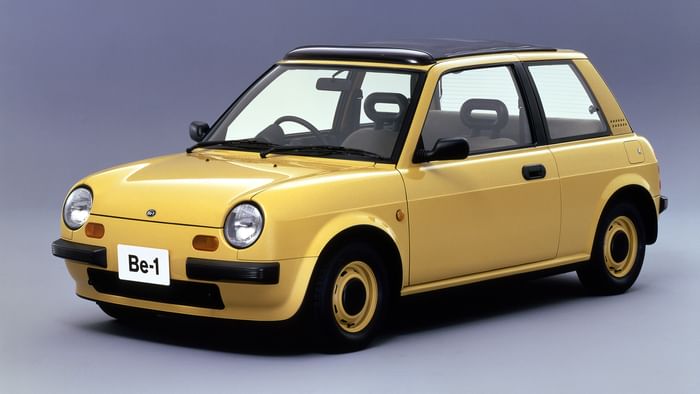
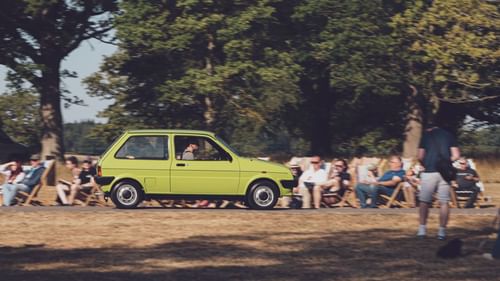
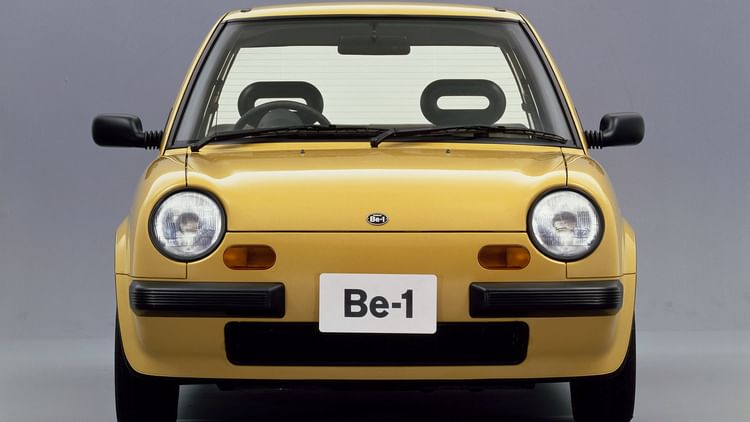
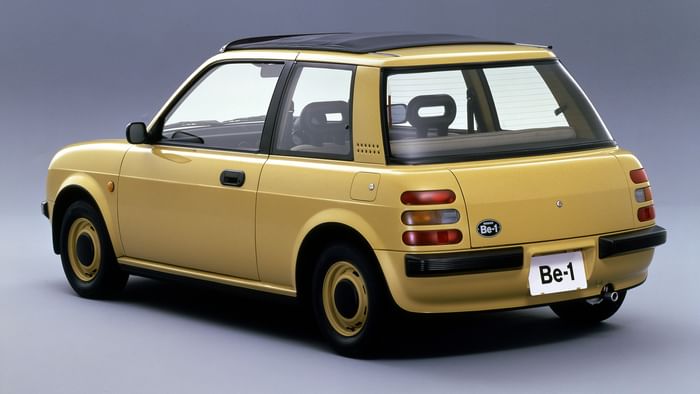
Going back to the beginning of the Pike Factory story, the Be-1 was the first car to be developed under the concept of ‘Nostalgic Modern’. Work began in 1984 on an experimental project to design something completely new using the underpinnings of a Nissan March/Micra. Originally shown as a concept in 1985, the Be-1 was arguably the first postmodernism vehicle and the first of a new wave of retro-inspired cars. The Be-1 (Plan B-1) predates the other Pike Factory cars, plus the new Volkswagen Beetle, Ford Thunderbird, Plymouth Prowler, Chrysler PT Cruiser, MINI and Fiat 500. It’s difficult to define an era and country of origin for the Be-1, but it wouldn’t have looked out of place on the streets of a European city in the 1970s. It’s always reminded me of an Autobianchi, but maybe I’m blinded by visions of an Abarth Be-1. Others see it as a Japanese take on the Austin Mini. Speaking in 1987, Austin Rover’s design chief Roy Axe claimed that the Be-1 had a few Mini clues ‘that just don’t really hang very well together’.
Forget any thoughts of keeping up with modern traffic. With a wheezy 987cc carburetted engine producing 52 tired horses and a choice of either a five-speed manual gearbox or lethargic three-speed auto, the Be-1 would just about manage to keep pace with city cars of the era.
The ‘Cosiness-oriented car’, that’s Nissan’s term, not mine, went into production in 1987. Even in an age of technological wizardry and innovation, the Japanese took the Be-1 to their hearts, to the extent that demand outstripped the planned supply of 10,000 cars. Buyers could select one of four colours: Pumpkin Yellow, Tomato Red, Onion White and Hydrangea Blue. A lottery system was used to allocate orders, with Nissan launching a canvas-top version to keep its customers satisfied. It, too, sold out almost immediately.
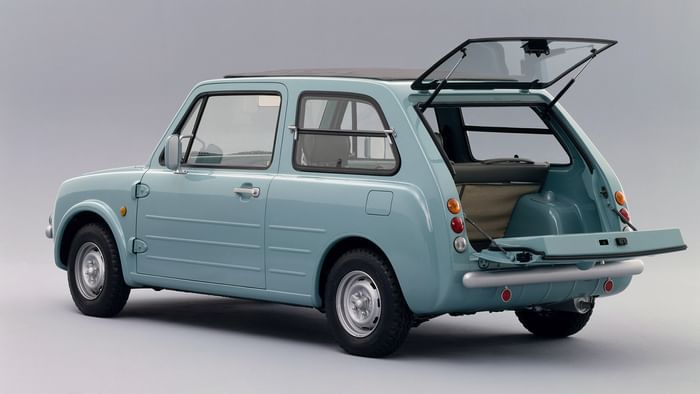
Be-1 soon made way for number two. Unveiled at a frenzied 1987 Tokyo motor show, the Pao was almost industrial in its appearance, with exposed hinges, tubular bumpers, Citroën Méhari-style ribbed panels and a dashboard finished in the same colour as the exterior paint. The two-spoke steering wheel had the appearance of something constructed using Bakelite, while the split tailgate delivered hints of an American station wagon. Only the modern air vents on the dashboard ruined the sense that you were sitting behind the wheel of something from the 1950s or ‘60s. Power was sourced from the same 987cc engine found in the Be-1, but with the weight increased from 700kg to 760kg, performance was never going to be a Pao strong point. What’s the hurry? Simply fold back the optional canvas and let the rising sunshine flood the cabin.
In an interview with the Figaro Owners' Club, the Pao’s designer Naoki Sakai said he got the idea for the project ‘after I saw a brand called Banana Republic [which] sold clothes with the feeling of travelling or safari’. His idea was to transfer this concept to an automobile, but he confessed that ‘the impact of Pao was not as strong as Be-1’.
The public didn’t share his reservations. Learning lessons from the demand for the Be-1, Nissan upped production to 50,000, but the Pao was sold out within three months. The Pao name comes from a Chinese word meaning a Mongolian portable dwelling, while Pike was chosen after the medieval spear to evoke the idea of spearheading new, cutting-edge design. There’s nothing fishy or faintly ‘Dad’s Army’ about the name…
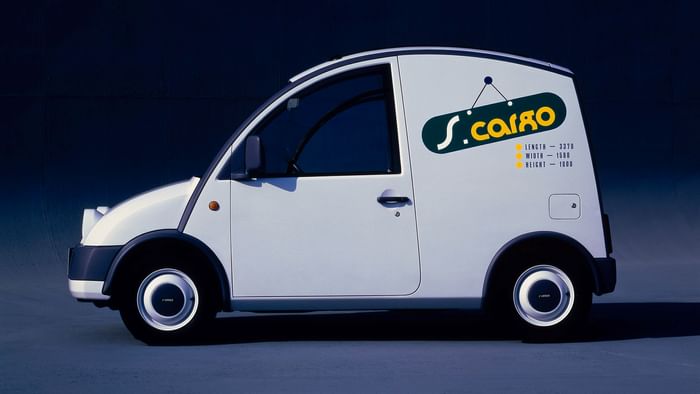
The S-Cargo was the next car to emerge from the Pike Factory. With a name that combined the French word for snail with ‘cargo’, the S-Cargo was arguably the boldest but most useful of the four Pike cars. Another postmodernism creation, it featured a 1230mm high load area and ample space on the side for an advertising slogan. Highlights included a removable sushi tray (yes, really), a table-like dashboard top, single-spoke steering wheel, dashboard-mounted shift lever, snail-themed floor mats, central instrumental binnacle and an optionally splitting bench seat. Further options included portal windows for the load area and an electric canvas roof. An increase in weight to 970kg was compensated by the fitment of a carburettor-fed 1487cc Sunny engine producing 73 les chevaux. If you don’t find the S-Cargo adorable, you don’t have a heart; it’s the Citroën 2CV Fourgonnette for the JDM generation. The cutest van on the planet? Nissan snailed it.
Despite production being limited to 20,000, the Figaro is the most recognisable of the Pike cars, due in part to the fact that so many were exported to the UK. Some 6000 have been imported into the country, with Britain playing host to the one of the largest Figaro clubs in the world. Unveiled as a concept at the 1989 Tokyo motor show, domestic sales began on 14 February 1991. For many people, it was love at first sight, with the entire production run sold out before a single car hit the road.
With styling inspired by the 1935 Datsun 14 Roadster, a turbocharged and fuel-injected 987cc engine mated to a three-speed automatic transmission, and a more upmarket interior, the Figaro was the most refined of all the Pike cars. ‘The Figaro was developed around the concept of creating a distinctive, personalised coupé that would allow owners to enjoy a delicate feeling of stylish elegance in everyday life’, was the promise made by Nissan in 1991. ‘The limited sales volume is to be divided into three allotments in order to shorten the delivery period and give customers a more precise delivery date. Under the limited sales plan, a lottery will be held in the event the number of orders exceeds the planned sales volume of a particular allotment.’ Nissan could have sold thousands more, such was the optimism before the economic crash.
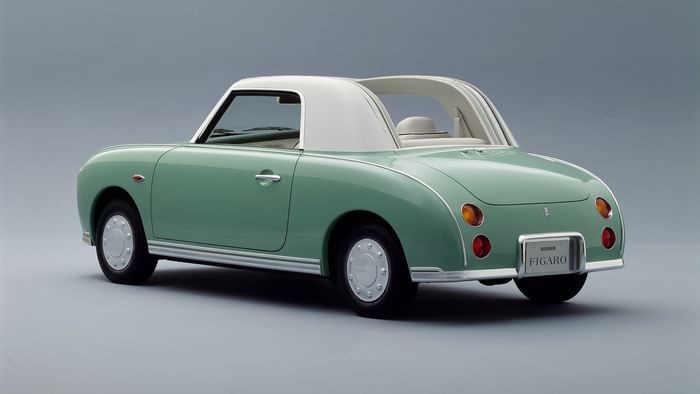
A lot is made of the Pike cars’ postmodernism design and retro influences, but less is said about the Figaro’s range of personalisation options. A decade before the launch of the new Mini, the Figaro came with 55 different parts and accessories split into different groups, namely: Convenient, Goods, Jewel and, I’m not making this up, Snob. Under the banner of ‘Tokyo Nouvelle Vague’ – which sounds like a song written by David Sylvian – Nissan said ‘the Figaro enables us to experience the real essence of elegance and sophistication. It is ideal for the person who enjoys savouring life one day at a time.’ Figaro lottery winners could select from a range of goodies, including eyelids, ski rack, cupholders, retro-styled CD player, boot tray, alloy wheels, lace seat covers, net shelf and much more. There was even a parking stick for mounting on the front bumper; ideal for spotting tiny kei cars on the congested streets of Tokyo.
There were four body colours to represent the seasons: Lapis Grey (winter; 6000 produced), Emerald Green (spring; 6000), Pale Aqua (summer; 6000) and Topaz Mist (autumn; 2000). A fluororesin paint was used to provide superior water repellency and to maintain a ‘new-car lustre over a much longer period’. All cars came with a contrasting white roof featuring a sliding soft top that folded neatly into the boot, leaving the rear pillars and roof rails in place.
The Pike Factory cars have always divided opinion, but you have to admire Nissan’s willingness to go back to the future. At a time when most Japanese car manufacturers, including Nissan, were pushing the envelope in terms of design, engineering and technology, the investment in the Pike project played on a different set of emotions. As we saw during the lockdown, when folk turned to the comfort of foods from their childhood, old television shows and pop-tastic tunes, mate, consumers are charmed by nostalgia and all things retro. Nissan tapped into this psyche to deliver four charming, cheerful and soulful cars. Honda taking on the supercar establishment with the NSX is one thing; Nissan offering a set of limited edition but affordable postmodernism cars is another.
Critics will argue that the bubble economy Japanese car industry was built on a house of cards; it’s easy to engage in wild flights of fancy when the cheques are blank and the credit is unlimited. Fair enough, but shouldn’t we be applauding the innovation that stemmed from Japan’s crazy period? Honda going after Ferrari, Mazda going crazy with sub-brands, Toyota toppling the S-Class, and Nissan getting on its Pike to go for a ride. Celebrate these good times, come on.
The Nissan Figaro is your best option if you fancy a slice of Pike in modern Britain. Prices range from £500 for a basket case to £25,000 for an immaculate and low-mileage example from a specialist. Spending £3000 to £5000 should be enough to get you on the Figaro ladder. Alternatively, look out for examples of the Pao or S-Cargo. They’re rarer than the Figaro, but they do pop up from time to time. I know this because they’re on my eBay watchlist!
I want the original, and in my opinion the best, Pike Factory car. It might be crude, slow and woefully out of its depth on the modern roads of Britain, but it has to be the one for me. Don’t tell ‘em your name, Pike.
This article first appeared in issue 5 of Classic.Retro.Modern. magazine.