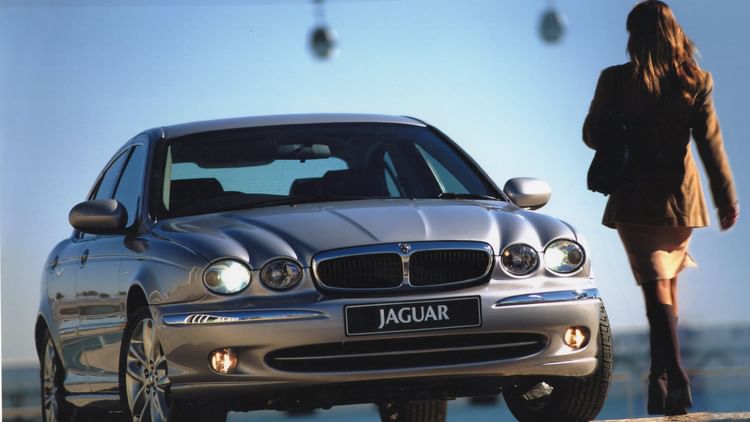
‘Just a Mondeo, no style, no class.’ You’ll find comments like this all over the internet, often from traditionalists of a certain age with very fixed ideas about what a Jaguar should be.
This article first appeared in Classic.Retro.Modern. issue 36. It’s republished with kind permission of the author, and remains one of the clearest defences of Jaguar’s most misunderstood modern car.
The backlash started with the X-Type, when naysayers seized on its Mondeo origins and tarred every subsequent Jaguar with the same brush. More than 15 years later, it’s still being blamed for problems Jaguar faces today.
Let’s be honest: Jaguar probably wouldn’t still exist without Ford. Not every decision from Uncle Henry was inspired, but turning Jaguar into a volume maker made sense in Detroit. To the status-obsessed guardians of the marque – and the market at large – small executive saloons and estates remained the preserve of the Germans and Italians, who were ‘allowed’ to platform share.
Never mind that Jaguar’s predecessor, Swallow Sidecars and Coachbuilding, began by rebodying Austins, Standards and Wolseleys, or that the company hadn’t turned a profit since its 1968 acquisition by BLMC. Privatisation in late 1984 did it the world of good, taking Jaguar out of British Leyland/Austin Rover control and, by 1990, into Ford’s portfolio in a $2.5 billion deal.
Ford’s influence began to show when internal quality audits pushed the incumbent XJ6 beyond any standard Jaguar had previously achieved. Beset by shortfalls in investment and delays, the almost all-new XJ40 finally launched in 1986 to rapturous acclaim – and bottomless warranty claims. CAR may have called it ‘a feat of poetry,’ but only the post-1990 cars truly delivered.
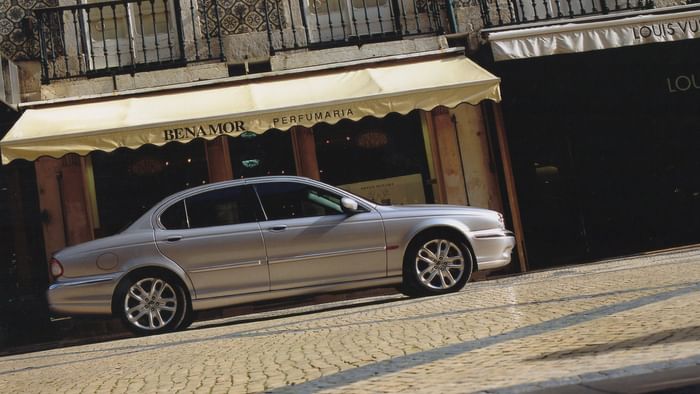
A 1993 refit brought the V12-engined XJ12 (XJ81) back into the limelight with a heavy refresh, but in truth it prepared the XJ40 for transformation into the 1994 X300. In brutal terms, the new car was a heavily reworked, top-and-tailed XJ40 with fresh panels from stem to stern. Ford money paid for the overhaul, and critical acclaim followed.
That same year, with cash flowing and market research complete, Ford became convinced Jaguar needed a smaller car – one positioned below the incoming S-Type to challenge the Audi A4, BMW 3 Series, Mercedes C-Class and other prestigious European rivals.
In recent years, Jaguar had built large saloons and luxury sports cars. Earlier models like the Mark 1 and Mk2 were the prototypical small executive cars, though their track success was tarnished by the thugs who prized their performance and handling as getaway vehicles. Better to cite the Rover P6 or Triumph 2000/2500 – cars that set the segment template the Germans spent decades perfecting through engineering and marketing.
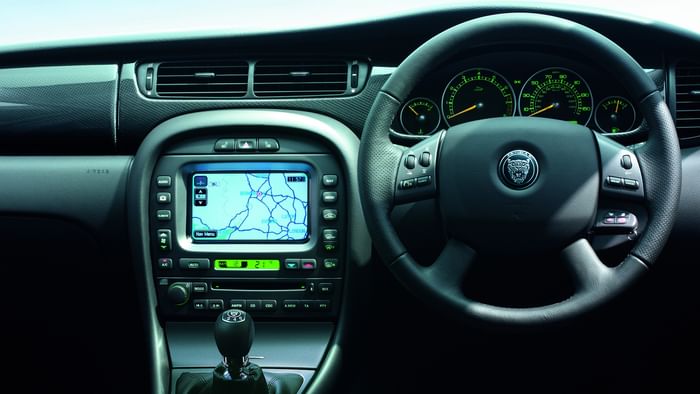
The next ‘problem’, if you could call it that, was how to build the new Jaguar, known internally as X400.
Ford’s billions didn’t stretch to a bespoke platform, and the rear-wheel-drive S-Type architecture – DEW98, also used for the Lincoln LS and eleventh-generation Ford Thunderbird – couldn’t be scaled down profitably.
Market research showed that customers would accept smaller-capacity engines and front-wheel drive in the segment if the badge was prestigious enough. Alfa Romeo and Audi proved the point with the 156 and A4 respectively: the 156 used transverse engines, while the A4 8D’s remained stoutly longitudinal in Audi tradition. Audi also offered four-wheel drive higher up the range. Diesels were becoming essential too – another area where Jaguar had no prior offering.
Survey feedback was one thing; the court of public opinion was another. Ford saw the quickest route to getting X400 into production was to base it on the second-generation Mondeo, known internally as CD132. The alterations went far beyond what Volkswagen Group did with its PL35 platform, shared by the Audi A4 8D and VW Passat B5/3B.
Furthermore, no-one slams the Alfa Romeo 156 for its Tipo heritage; its platform had evolved so far from the original donor that very little was shared. For Type Two Revision 3, as the 156’s specification dictated, it gained a longer wheelbase and different suspension.
Alfa’s motor sport history was as illustrious as Jaguar’s. Like Jaguar, it became a volume maker against a pre-war background of niche, prestige models, was protected from the market’s ups and downs by the state, and introduced lower-priced, front-wheel drive cars to its line-up. It, too, was bought by a larger conglomerate – Fiat Group – in 1986.
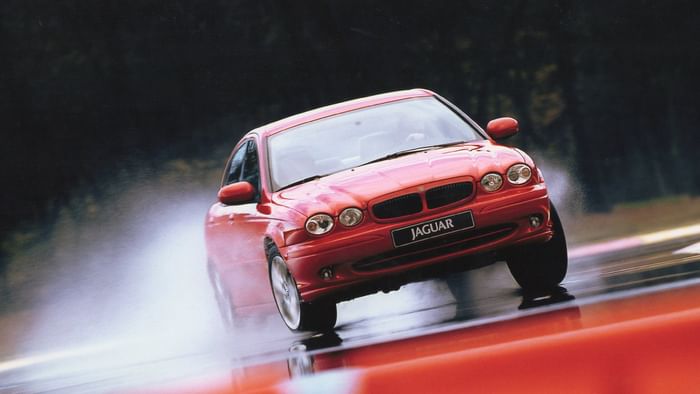
Ford had, admittedly, wanted more volume from Jaguar than Fiat did from Alfa Romeo. Alfa also had a longer history of purely front-wheel drive cars than Jaguar – though later smaller V6 and four-cylinder diesel X-Types were front-wheel drive. Italians, however, bought Alfas regardless. Us Brits? As Ford would discover, there weren’t enough of us sympathetic to the cause to buy the X-Type in the numbers it envisioned – but that was its mistake, not Jaguar’s.
Where the 156 transcended its origins, so did X400 – but to an even greater extent. Every dimension of CD132 was changed: 44mm was cut from the wheelbase. AROnline put commonality between the X-Type and Mondeo at 19 per cent, though Jaguar’s own data suggested far less, with different bushes, pad material and brake calipers used to further quell noise, vibration and harshness.
The XJ-V6 2.5- and 3.0-litre engines, as fitted to launch models, had different heads and engine management to their Ford equivalents. Those cars also used a four-wheel drive system, Traction4, unique to the X400, necessitating different suspension and damping – though the rear arrangement was loosely related to that of the Mondeo estate.
It’s worth noting that Traction4, with its 40:60 front/rear bias, had nothing in common with the 58:42 system used on the Mk1 Mondeo (CDW27), despite the MTX75 manual gearbox being used in both. Automatic X-Types used a Jatco unit not employed in any Ford application. The transfer case, tightly packed into the body, didn’t fare especially well in service (much like its sills), and the viscous coupling was quietly deleted in 2004.
Four-wheel drive had more precedent in Jaguar lore than some realise: the stillborn XJ41/42 ‘F-Type’ used a Ferguson Formula system, as did the XJ220 V12 concept car – the latter reverting to two-wheel drive and a V6, to the horror of investors, critics, and moaning pub bores.
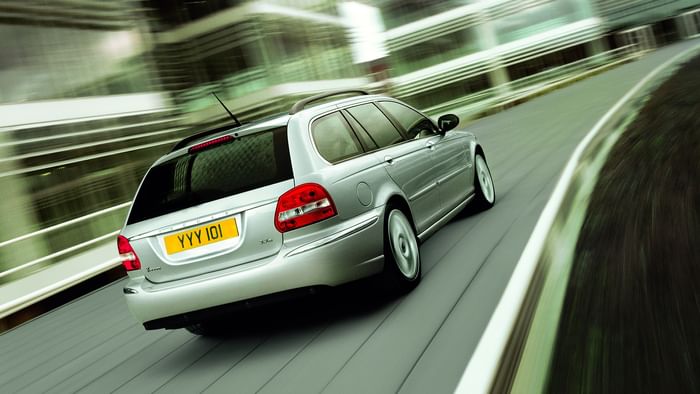
There was also an X-Type estate, launched in 2004. Coachbuilders had long since customised the earlier Series III XJ6 and XJ40 – Jaguar even tried it itself, to great effect – but none were produced officially. A year earlier, an entry-level 2.1-litre V6 had joined the range, alongside a 2.0-litre diesel, both front-wheel drive, the latter using a reworked Ford Duratorq engine.
Ford spent £400 million retooling for the X-Type, remodelling its Halewood plant in the process. And if the Germans could offer small-capacity six-cylinder petrol and four-cylinder diesel models, why couldn’t Jaguar?
The problem was perception – unfair perception – though the sales figures tell a different story. For a public still clinging to rose-tinted memories of E-types, Le Mans wins and big, out-of-fashion saloons, the X-Type was too much, too soon. It didn’t matter how much engineering had gone into it; they weren’t buying (they hadn’t been buying the so-called ‘traditional’ Jags either, but that’s beside the point). The young, thrusting executives stuck to their German cars, while a few others opted for Alfa Romeos or Saabs.
It was Jaguar’s best-seller during its production run, with diesels accounting for 97 per cent of sales by 2008. Even so, those figures paled next to Ford’s over-ambitious projections. It may have been a failure by Dearborn’s standards, but Jaguar staff knew otherwise.
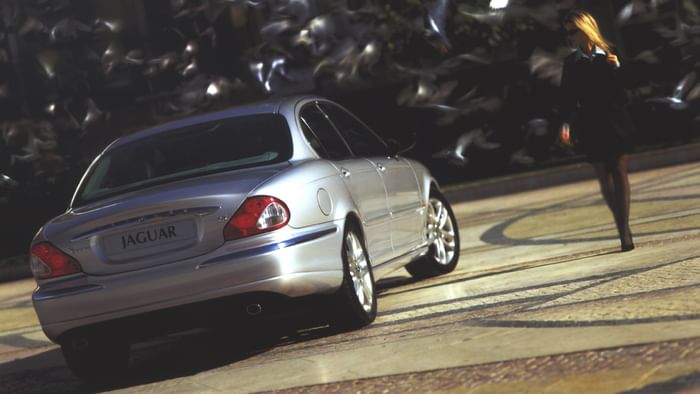
Not even royal patronage altered the X-Type’s fate: our late Queen had pre- and post-facelift estates, the latter seen parked at Sandringham during her funeral. That final 2008 facelift top-and-tailed the car, and a now-beloved 2.2-litre diesel was offered for its last year of production as the range was whittled down.
More sinned against than sinning, Jaguar cannot win. Its history is to die for (admirably served by the Jaguar Daimler Heritage Trust) but people must let it move on; these same people can go out and buy the Jaguars they happen to like second-hand.
You can see its recent publicity blitz as a box-ticking exercise or a canny visibility campaign; the £1,500 XJ6 fans whose ire hath no bottom remain free to howl into the echo chamber of social media until the eventual heat death of the universe.
The likes of Type 00 see Jaguar (hopefully) returning to the approach that once made it profitable: a niche maker of luxury cars, with a small line-up. Its naysayers have already tanked its prospects without seeing the new models.
Whether you liked the X-Type or not, this deranged gatekeeping has to stop.
This article was first published in Classic.Retro.Modern. issue 36. You can find the current issue and back issues at classicretromodern.com. Photos © Jaguar and Magic Car Pics.