The hidden world of Britain’s trailer aristocracy
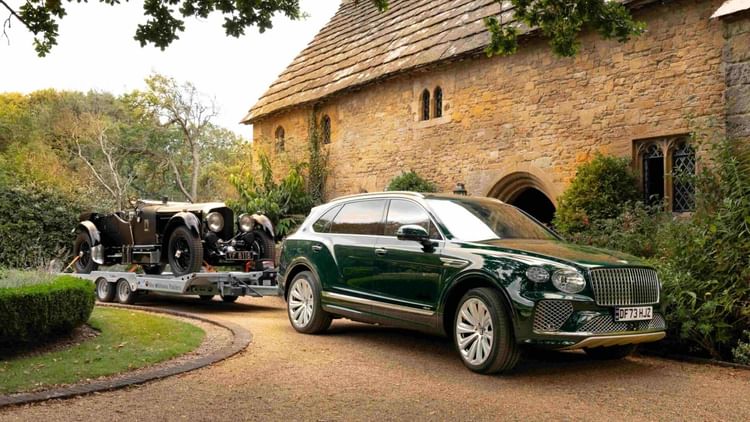
Few rivalries are more gloriously British than the one between Ifor Williams and Brian James.
It is not fought with swords, pistols or even particularly harsh words. It is waged with galvanised steel, leaf springs, broken lights, cracked mudguards, hand-written number plates and dangling wires, all underpinned by the unwavering conviction that one’s chosen trailer manufacturer is the only thing standing between civilisation and the complete collapse of the empire.
What makes a suitable trailer?
To outsiders, a trailer is simply a box on wheels that follows a vehicle around. This is the sort of opinion expressed by people who think tea is “just hot leaf juice” or that all Labradors look the same.
To Britain’s gentlemen farmers, horse owners and weekend racers, however, a suitable trailer is not merely equipment. It is an extension of identity, social class, mechanical philosophy and, occasionally, even a cause of marital discord.
The kingdom is divided in two: House Ifor Williams and House Brian James. Everything else is a trifle. Mere background noise.
The gentry trailer
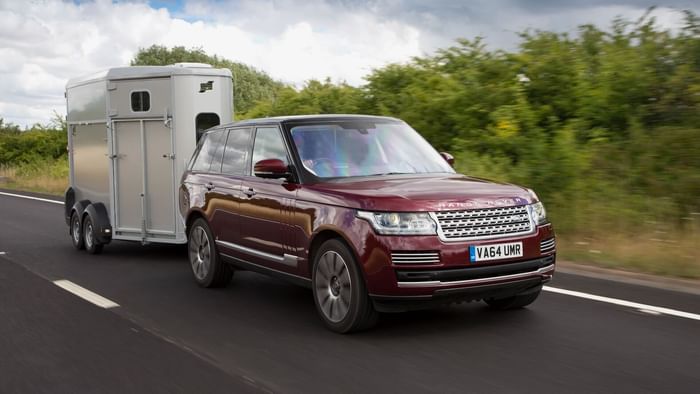
Ifor Williams has become the default choice of the landed gentry with just enough acreage to complain about inheritance tax while driving a Land Rover worth more than their first house.
An Ifor Williams trailer can usually be found parked beside a stable, a tractor shed or a barn that has recently been converted into “luxury rural accommodation”. Its owner will tell you, without prompting, that it is “properly built”.
This means it weighs approximately the same as a medieval siege engine and could probably survive direct artillery fire.
An Ifor Williams trailer does not so much transport livestock as reassure them. Sheep enter it feeling anxious, but arrive emotionally supported. Its chassis is discussed in the same reverential tones normally reserved for cathedral architecture.
Its devotees believe that if civilisation were ever to collapse, only three things would survive: cockroaches, Land Rover Defenders and Ifor Williams trailers.
Add lightness
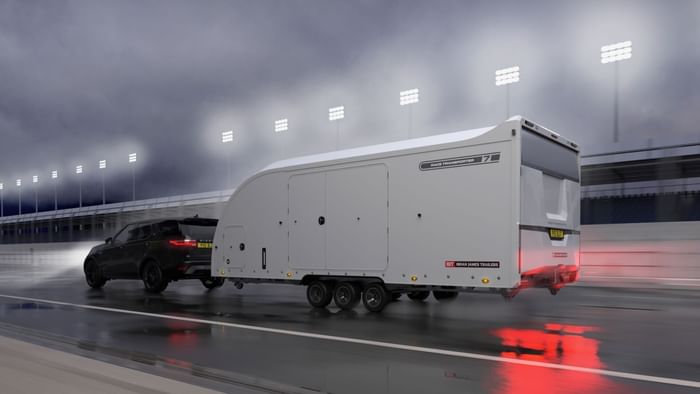
Meanwhile, across any British racing paddock, stand the disciples of Brian James, polishing alloy wheels that have never knowingly touched mud.
An Ifor Williams smells faintly of silage and wet dogs. A Brian James smells of brake cleaner and premium unleaded. Brian James owners do not merely transport cars; they curate them. They all own at least six colour-coded ratchet straps and can reverse through a paddock gate only four millimetres wider than the mirrors of a battered white Transit van without spilling their black coffee.
Nürburgring lap times appear in conversations about supermarket parking. Their opinions on tyre pressures are both unsolicited and strangely persuasive.
To them, an Ifor Williams is a magnificent agricultural implement in much the same way Stonehenge is a magnificent garden ornament: functional, historic and needlessly heavy.
The royal trailer
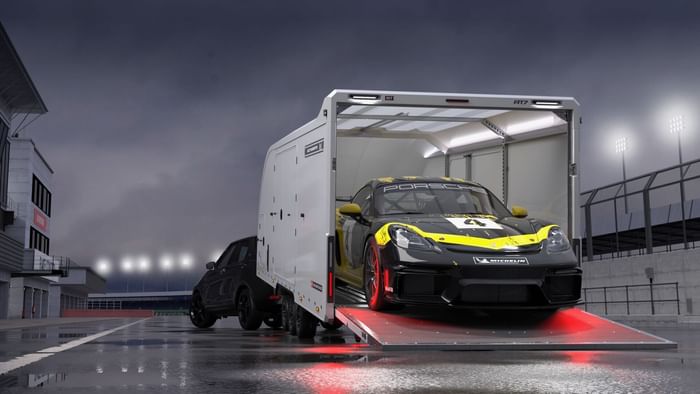
Then enters the aristocrat of aristocrats: the Race Transporter.
This is not simply a trailer. It is what happens when motorsport enthusiasm, more disposable income than common sense and an inability to stop adding optional extras collide in perfect harmony.
It is less a trailer than a rolling pit garage. It whispers: “I could have bought another Aston Martin, but that would have been so vulgar.”
Owners no longer speak of towing, but of “race logistics”. They wear matching team jackets and own enough cordless battery tools to rebuild a GT3 car beside the M40. Their portable air compressor usually costs more than your daily banger.
Opening the Race Transporter at an obscure hillclimb event resembles the arrival of a Formula One team accidentally wandering into club motorsport. First, the awnings unfold. Then the lighting appears. Next, an enormous Snap-on tool cabinet emerges, followed by someone plugging in an espresso machine.
At least one neighbour quietly questions every financial decision they have ever made, while the Race Transporter owner insists that it is “actually very practical”.
This is technically true in the same way that a Swiss Army knife containing 47 attachments is practical. You may only need a bottle opener, but isn’t it comforting to know you also possess a fish scaler, magnifying glass and emergency toothpick?
Olde worlde values
Naturally, the Ifor Williams faithful regard this spectacle with deep suspicion.
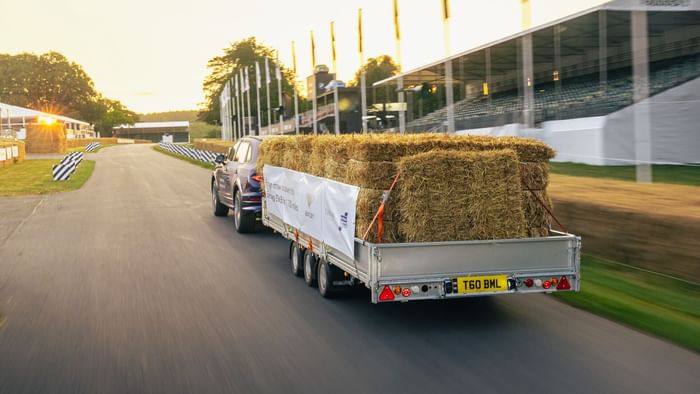
Their trailer can carry sheep, diggers, hay bales, fencing posts, a compact tractor and, if absolutely necessary, several decades of family expectations. It requires little maintenance beyond occasional greasing and the comforting, sensible application of Fenland mud.
By comparison, the Race Transporter appears to require software updates.
The Brian James devotees, however, see elegance where others see extravagance. Every latch clicks with expensive precision. Every hinge closes with satisfying authority. Every panel aligns perfectly. The trailer tracks behind the tow vehicle with the serene confidence of something designed by engineers who have arguments about fractions of millimetres.
Meanwhile, somewhere in the middle sits the ordinary observer, wondering why grown adults are passionately debating axle configurations at seven o’clock on a Sunday morning.
The answer is simple: Britain has always been remarkably good at inventing class systems where none should logically exist.
We have social hierarchies based on supermarkets, biscuits, garden sheds, barbecues and lawnmowers. Now, inevitably, we have them for trailers. You may believe you are buying galvanised steel, but in reality you are selecting a tribe.
Which side are you on?
Buy an Ifor Williams and you inherit generations of practical wisdom, endless stories beginning with “back in my day, these were built properly”, and neighbours who lend you fencing tools before asking your surname.
Buy a Brian James and you inherit a network of racers capable of debating wheelbase distribution for six uninterrupted hours while simultaneously recommending ceramic coatings.
Neither side admits that the other produces excellent trailers. Such concessions would weaken the mythology.
An Ifor Williams owner will reluctantly acknowledge that Brian James trailers are “very nice if you’re only carrying racing cars”. A Brian James owner will concede that Ifor Williams “certainly know how to build something indestructible”.
These are, within their respective cultures, declarations of extraordinary generosity.
The rivalry persists because both companies are more than mere engineering. They represent ideals. One celebrates rugged utility. The other celebrates refined purpose. Both are unapologetically British, stubbornly confident and entirely convinced that everyone else has misunderstood what a trailer ought to be.
Glorious irony
And perhaps that is the greatest joke of all.
After thousands of pounds spent, hundreds of forum arguments, countless cups of tea consumed in paddocks and pit lanes, and endless debates over gross vehicle weight, braking systems and suspension geometry, both trailers end up doing exactly the same thing.
They obediently follow another vehicle from one muddy field or racing circuit to another.
The sheep remain blissfully indifferent. The Caterham Academy car does not care whose logo is embossed on the mudguards. The horse has never once expressed a preference.
Only humans could transform a collection of steel beams and wheels into a matter of philosophy.
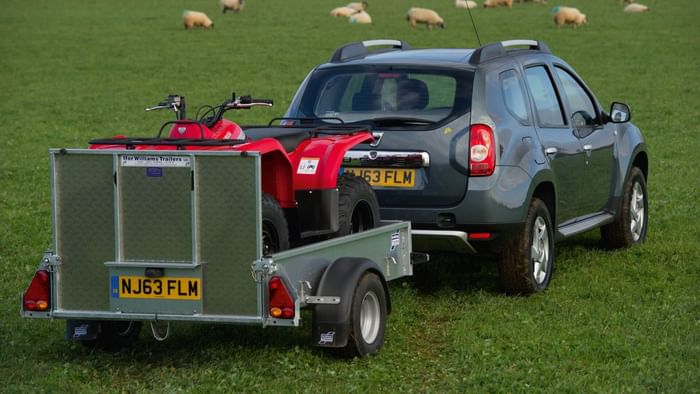
Yet every Friday afternoon, somewhere in Britain, a spotless Brian James will glide towards a circuit behind an equally spotless tow car, while an Ifor Williams carrying half a farm and several improbable loads that would horrify any self-respecting health and safety inspector rumbles confidently down a Dorset country lane.
Each driver will glance knowingly at the other and quietly conclude that the other chap has made an interesting, if fundamentally misguided, life choice.
Britain is gloriously incapable of taking anything entirely seriously while simultaneously taking absolutely everything far too seriously.
Arguing over trailers will go on with the enthusiasm normally reserved for politics, football and whether the milk should go in first.
Long may the aristocracy of British trailers reign: equal parts engineering excellence, social theatre and rolling proof that no object is too mundane for the British to turn into a badge of identity.
Photos courtesy of Brian James, Ifor Williams, Iconic Auctioneers and Newspress.