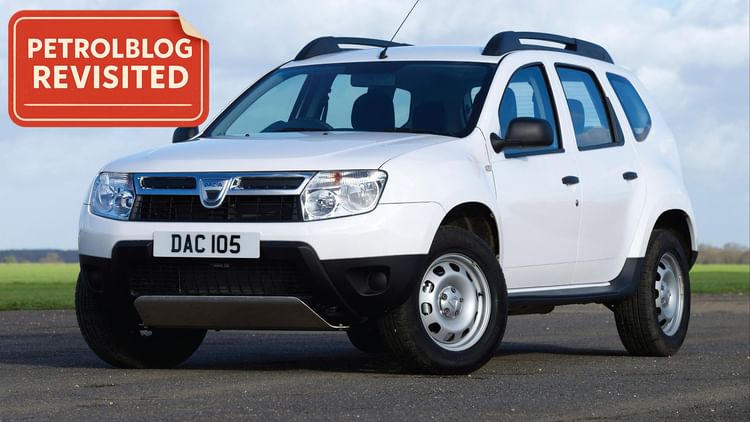
The Dacia Duster arrived in the UK at a time when the idea of a new, genuinely usable 4x4 for sensible money felt faintly absurd. Back in 2013, this review involved more head-scratching, spreadsheet abuse and late-night rationalising than almost any other new car on Petrolblog.
More than a decade on, early Dusters are now firmly embedded in the used market, still doing honest work in rural driveways, towing fields and muddy car parks. That makes this original review worth revisiting – not as a hindsight-heavy reassessment, but as a reminder of just how oddly compelling the Duster felt when it was new, bare-bones and gloriously unconcerned with fashion.
What follows is the original road test, lightly refreshed for clarity but otherwise left to stand on its own merits.
A bargain that made me reach for the calculator
On paper, the Dacia Duster has the potential to be Petrolblog’s perfect new car. A spacious family car for £8,995 or – should you fancy it – a proper 4x4 for just £10,995. But more than just a ‘Petrolblog car’, the Dacia Duster could be just what I need right now. So, having driven it, am I more or less convinced by the Dacia Duster?
Put it this way: I’ve done more head-scratching and number-crunching following my drive in the Dacia Duster Access 1.6 4x4 than I have after driving any other new car on Petrolblog. I still maintain that – as with the Sandero – the basic, poverty-spec Access trim level is the way to go, but sadly I can’t take advantage of the Duster’s bargain-basement £8,995 price tag. Because – for me at least – the 4x4 is the only option…
Three Dusters, one clear favourite
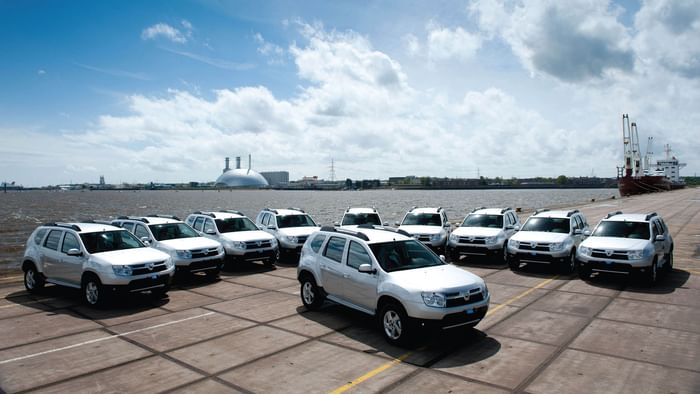
I was fortunate enough to drive three different flavours of Duster, pretty much back-to-back. First off was the top-spec, £12,995 Laureate with the super-efficient 1.5-litre diesel engine. Next came the mid-range, £11,495 Ambiance with the same 56.5mpg/130g/km CO₂ diesel lump. But finally, I got behind the wheel of the Dacia Duster Access 1.6 4x4 and – despite some obvious drawbacks – it topped the lot.
In fact, I was so impressed that, following a brief drive in the brilliant Renaultsport Twingo, I jumped back into the UN-spec Access 4x4 and had another go. No, really – it was that good. But it won’t be to everyone’s tastes…
Access vs Laureate: How much comfort do you really need?
That’s because the plusher trim levels, with the option of the diesel engine, are arguably the most sensible choice for the majority of buyers. I’ll come on to the 1.6-litre petrol engine in a moment, but the Renault/Nissan 1.5 dCi engine – as tested in the new Renault Clio – is very good. For a start, there’s the aforementioned economy, which should help to make the Duster an incredibly cheap car to run. Then there’s the level of spec…
As someone who is used to running a 1989 Land Rover 110, I can quite happily forgo a few ‘luxuries’ in my daily drive. But for anyone accustomed to automatic-this and automatic-that, the basic Duster may come as a bit of a shock. To enjoy the benefit of air conditioning, you’ll need to fork out £12,995 for the Duster Laureate.
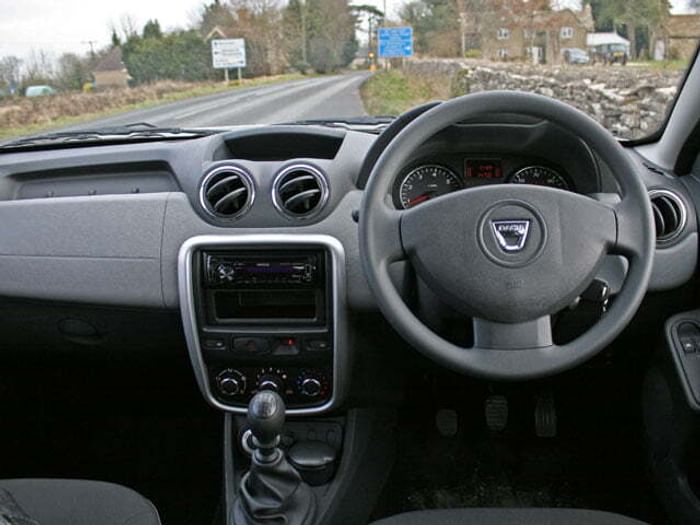
There are other things to consider too: like the fact that the Access model doesn’t have a 60:40 split folding rear seat. Or a height-adjustable steering wheel. Or USB, AUX, radio or even a glovebox light. Your children won’t thank you for the ‘windy-up’ rear windows either – a luxury reserved purely for the top trim level.
And yes, the Laureate model does feel the most special of the trio. Perceived quality is enhanced by the leather steering wheel, piano black and chrome detailing, chrome door handles and ‘Compass’ black upholstery. I say perceived because, upon closer inspection, the quality isn’t all that great. Certainly not compared with a Skoda Yeti or Nissan Qashqai. But just remember the price…
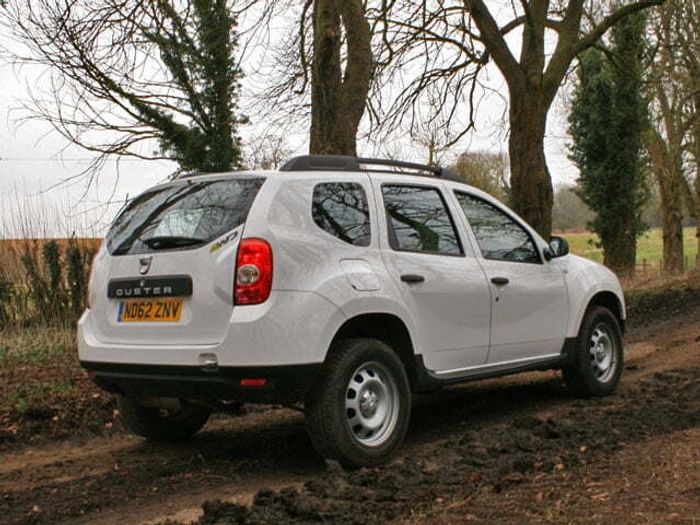
Engines and gearboxes: Diesel sense vs petrol charm
Putting running costs to one side for a moment, the diesel engine is arguably the nicer engine to live with. There’s plenty of low-end torque, although it does seem to run out of steam rather quickly. It’s also paired with a six-speed gearbox, with the two-wheel-drive petrol engine having to make do with a five-speed ’box. The diesel doesn’t feel especially refined – there’s plenty of clatter at idle – but for most buyers it’s the one to go for.
On the road: Better than it has any right to be
What does the Dacia Duster feel like on the road? Well – ambitiously reading your mind here – far better than you might expect. Ride comfort has clearly been prioritised over handling, and that’s probably the right call. All but the worst bumps are soaked up with aplomb and, assuming you don’t try to drive it like a hot hatch, it behaves well enough. Guess how much body roll there is and you’ll probably be about right.
The steering is comically light, but again, given the Duster’s proposition and target market, it feels well judged.
Petrolblog logic: When the heart beats the spreadsheet
Right, prepare yourself for some old-fashioned Petrolblog logic. Or, to borrow a phrase from Peter Counsell, Petrolblogic. If you’re planning to keep your Duster for a long time and your family is a bit precious about spec, buy the front-wheel-drive Dacia Duster Laureate. It’s hard to justify saving £1,500 by opting for the Ambiance, because there will come a time when you really want the air con, adjustable steering wheel, split rear seats or the ability to see inside the glovebox at night.
But my money would be on the Dacia Duster Access 1.6 4x4; a case of heart ruling head once again.
Why the Access 4x4 feels the most honest Duster
That’s because the Duster’s character shines through most clearly in this version. The stripped-out, wipe-clean, go-anywhere approach works because it’s a genuine case of all or nothing. By doing away with almost everything, the Access 1.6 4x4 feels the most authentic of the lot.
Which rather makes the front-wheel-drive Access 1.6 a redundant vehicle, existing largely for headline-grabbing price purposes. You’d do well to achieve the claimed 39.8mpg in the 4x2, which isn’t dramatically better than the 35.3mpg you might see in the 4x4. And the 1.6-litre petrol engine is relatively unrefined, sounding coarse when pushed hard.
And you will need to push it hard if you want to make progress. Overtakes can be nervy, to the point where you may wish you’d gone diesel. It’s forgivable in the 4x4, where the drivetrain makes up for it. Less so in the 4x2.
A proper 4x4, minus the nonsense
But don’t let that put you off. Driving the Dacia Duster 4x4 is huge fun, leaving me grinning from ear to ear. There’s a proper old-school, mechanical feel that puts you right at the centre of the experience, though I’d need more time to see how long the novelty lasted.
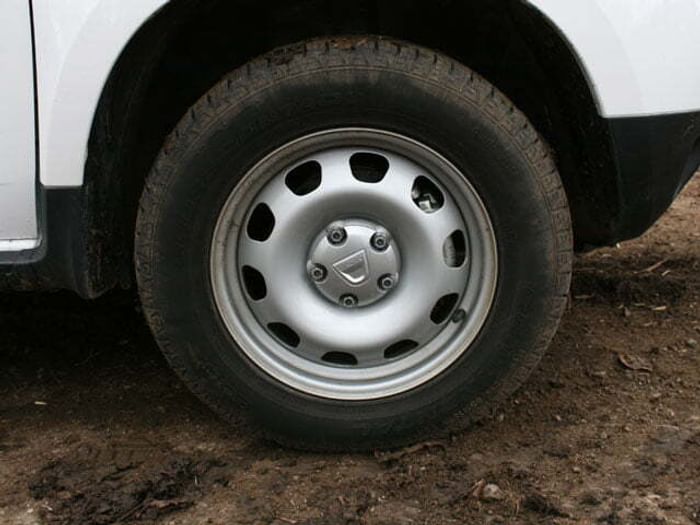
Then there’s the spec – or rather the lack of it – which is a monumental success in the Access 4x4. Those 16-inch steel wheels are a thing of beauty, ideal for green-laning at the weekend and utterly immune to kerbing anxiety.
The same applies to the black bumpers. Pick up a few dents and scratches and the Duster simply looks like it’s being used as intended. Each mark becomes a war wound; a story for the bar on a Friday evening.
That’s because the Dacia Duster 4x4 is a proper off-roader. There are no electronic gimmicks, but you do get front-wheel drive, permanent four-wheel drive or an automatic mode. There’s also an incredibly low first gear acting in lieu of a low-ratio transfer box. Neat. Unlike the two-wheel-drive petrol, the 1.6 4x4 also gets a six-speed gearbox.
During the admittedly light off-roading I managed, the Duster gave the impression it would keep going until it genuinely ran out of ability.
The catches: Tax, boot space and three stars
What's the catch? Aside from the 35.3mpg – which isn’t disastrous for a proper 4x4 – there’s the emissions. At 185g/km CO₂, the Access 4x4 sits in road tax band I: £335 in year one and £220 thereafter. The diesel 4x4 emits just 137g/km, resulting in a £125 flat fee. That’s a significant difference.
Four-wheel drive also eats into boot space. The two-wheel-drive Duster offers 475 litres with the seats up, rising to 1,636 litres folded. The 4x4 drops to 408 and 1,570 litres respectively – and remember, there’s no split rear seat.
And yes, the Access 4x4 is about as stripped-out as a modern car can be. Many vans feel more plush. For some – myself included – that’s not a problem. In fact, it’s part of the charm, something that erodes the more kit you add. Best advice? Try them all.
Finally, there’s safety. A three-star Euro NCAP rating will inevitably weigh heavily if you’re carrying children. It certainly does for me. That said, read between the lines and the verdict isn’t entirely damning; it’s worth digging into the detail.
Revisited: The Duster, then and now (2026)
Fast-forward to 2026 and the sums look very different – and oddly, even more flattering to the original Duster.
A decent 2013 Dacia Duster 4x4 now sits comfortably in the £3,000-£4,000 bracket. That buys you a genuine, usable four-wheel-drive family car with honest mechanicals, unfashionable engines and very little to go wrong. You might get some scrapes, a few hard miles and the odd interior rattle, but that feels entirely on-brand.
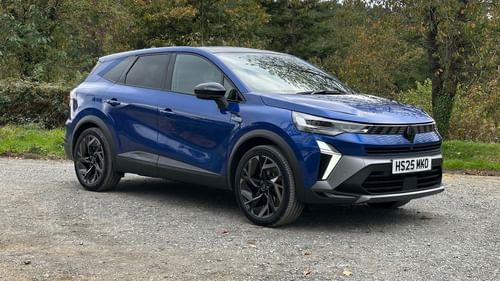
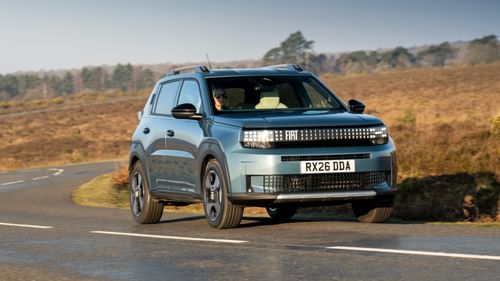
Try to buy the same idea new today and things escalate quickly. A brand-new Duster with four-wheel drive now starts north of £24,000 – and that’s before you’ve added the layers of complexity, technology and expectation that modern buyers are told they need. It’s still good value by contemporary standards, but it’s no longer the disruptive, eyebrow-raising bargain that stopped everyone in their tracks back in 2013.
And that’s really the point. The original Duster Access 1.6 4x4 wasn’t just cheap: it was refreshingly uncomplicated. It felt like a loophole. A reminder that you could still buy a new car built around use rather than image, capability rather than marketing, and steel wheels rather than lifestyle photography.
Viewed through today’s lens, that early Duster feels even more charming than it did at the time. Not because it was perfect – it wasn’t – but because it represented something that has quietly slipped away: the idea that a brand-new, genuinely capable 4x4 could also be a rational purchase.
Which means my 2013 conclusion still stands, just with more conviction. If I could make the numbers work back then, I’d have bought one. And if I were shopping today, I’d be far more tempted to spend £3-4k on a used original than £24k chasing the modern equivalent.
And yes, I’d still probably end up browsing Auto Trader for something even dafter instead.
Image note: Some of the photographs within this article were taken during the original 2013 road test, using equipment that felt perfectly adequate at the time. They haven't aged quite as well as the Duster. Please enjoy the ‘letterbox’ effect.